




Case Study: Geocell Erosion Control Around a Pond
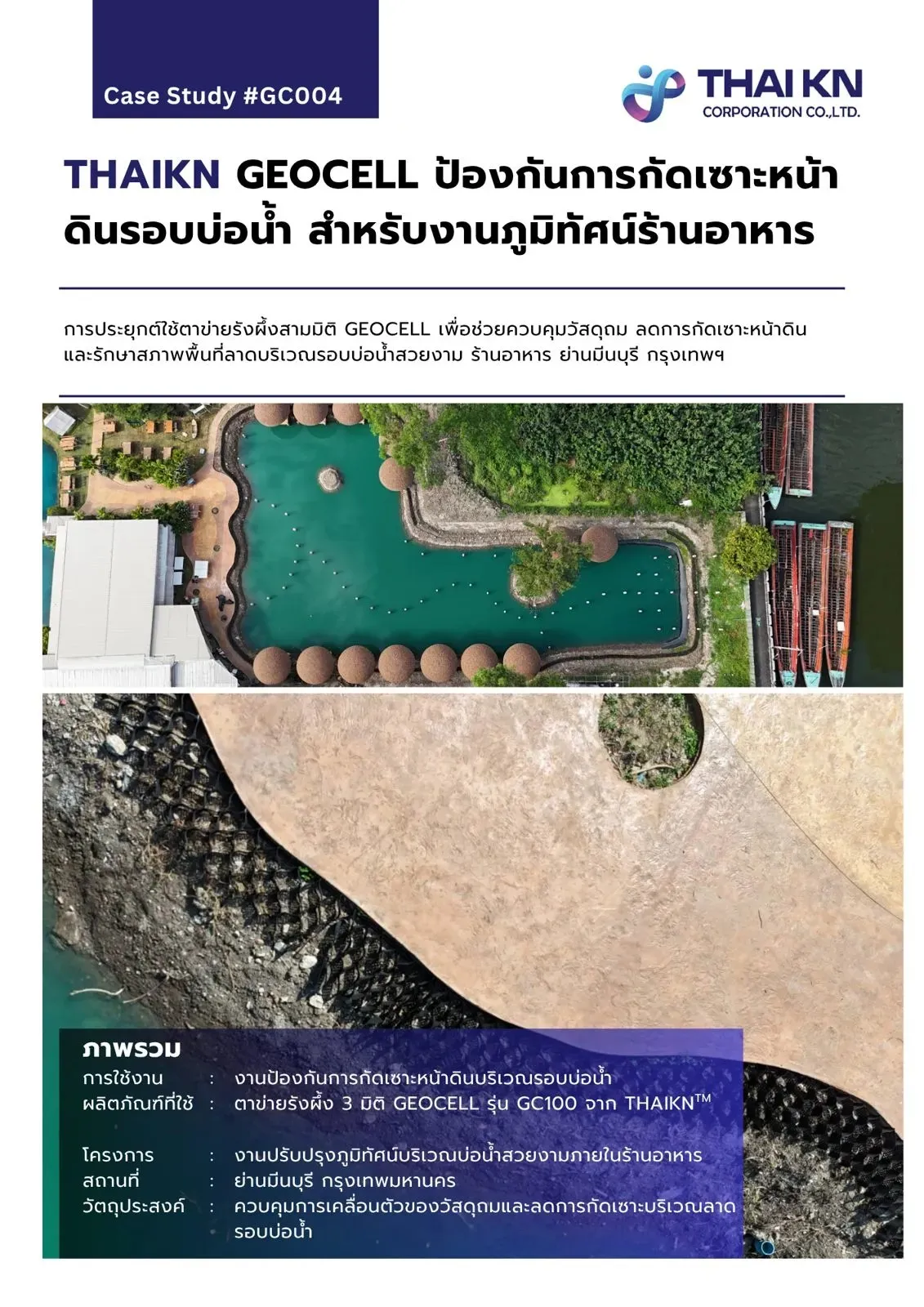
THAIKN Erosion control of topsoil around a pond, for a restaurant landscape
Erosion control of topsoil around a pond
for a restaurant landscape, using THAIKN™ GEOCELL honeycomb mesh
The sloping ground around a pond edge is one of the places most likely to suffer topsoil erosion (Soil Erosion) from rainfall, surface runoff and changes in site conditions, especially in landscape work that needs to keep a natural look while still controlling material on the slope.
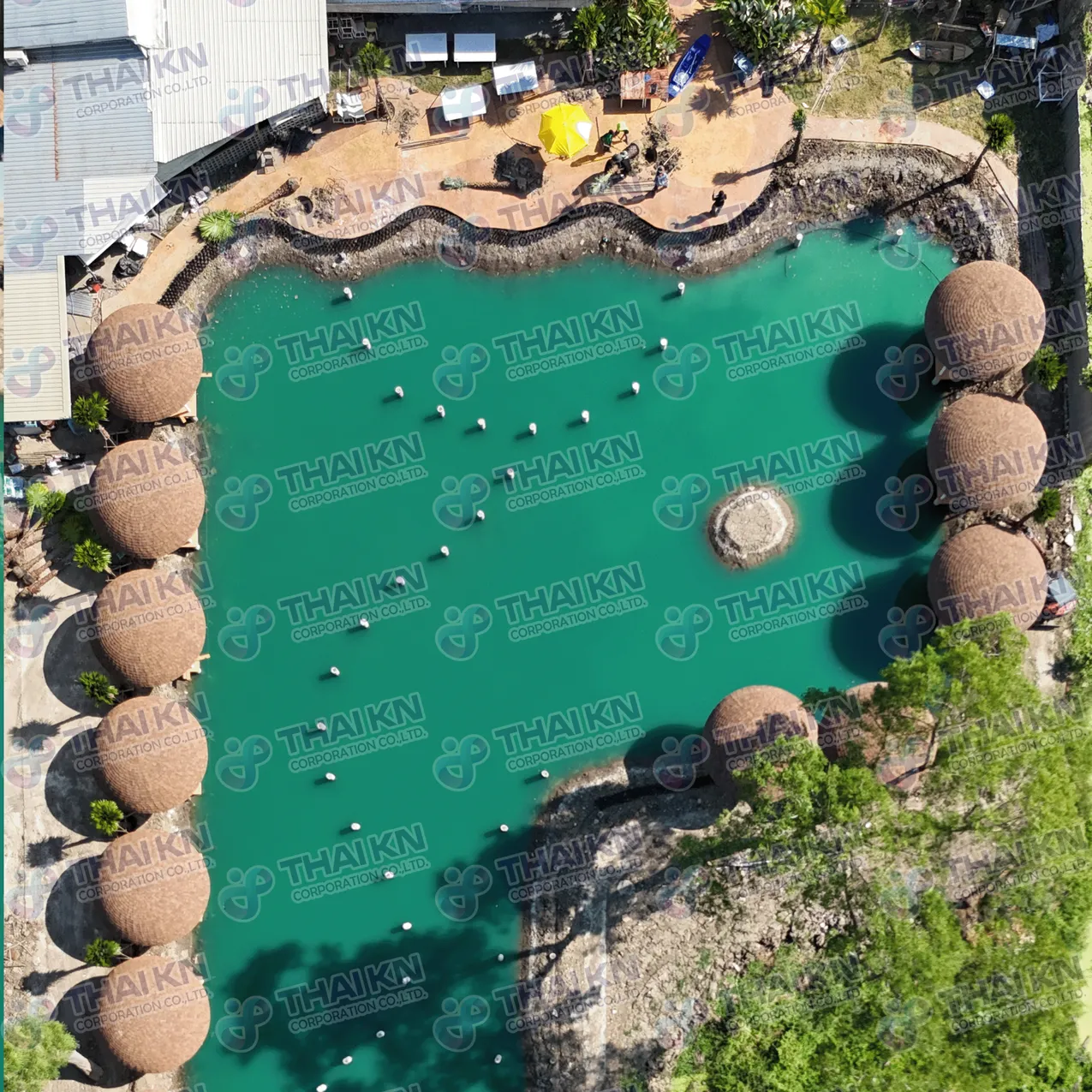
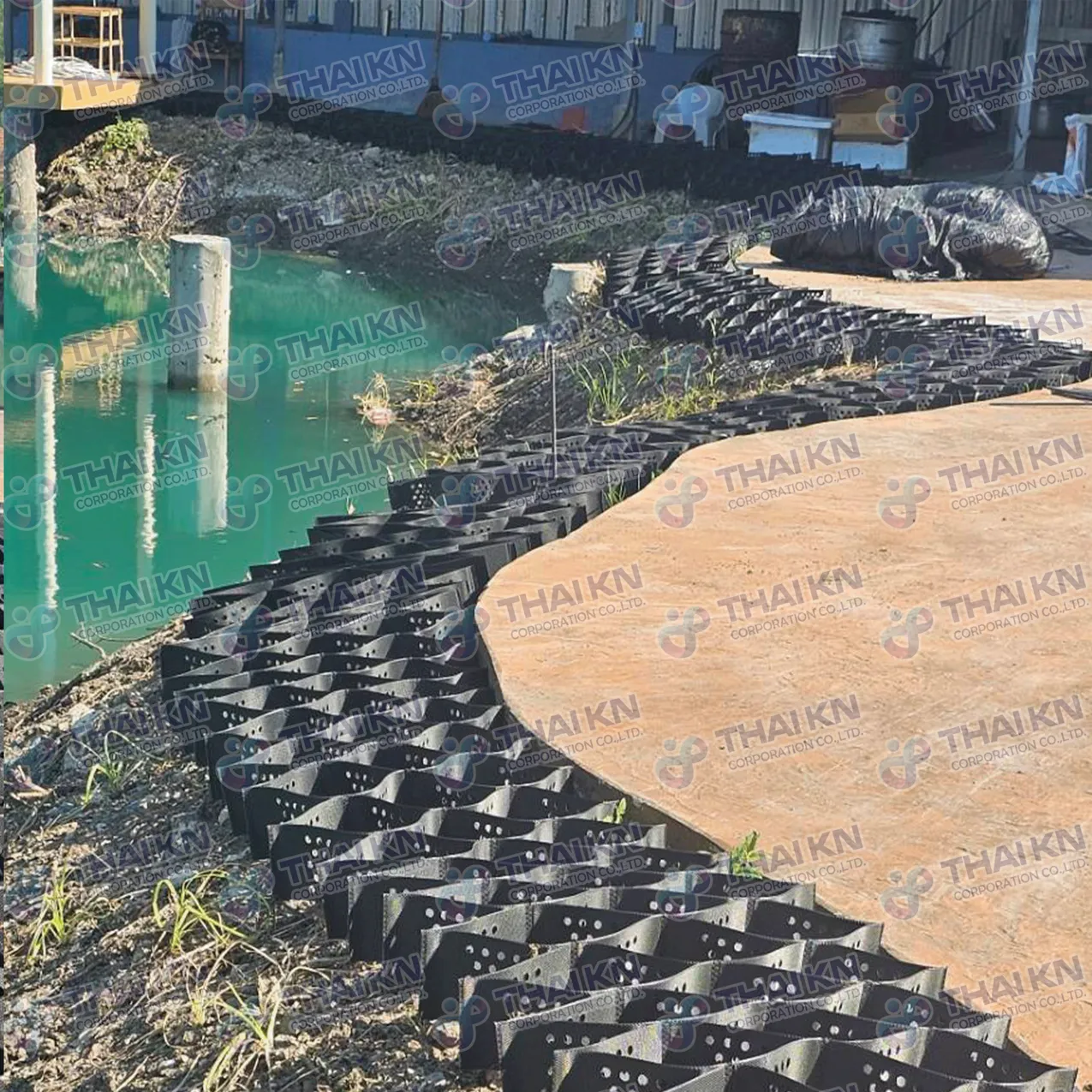
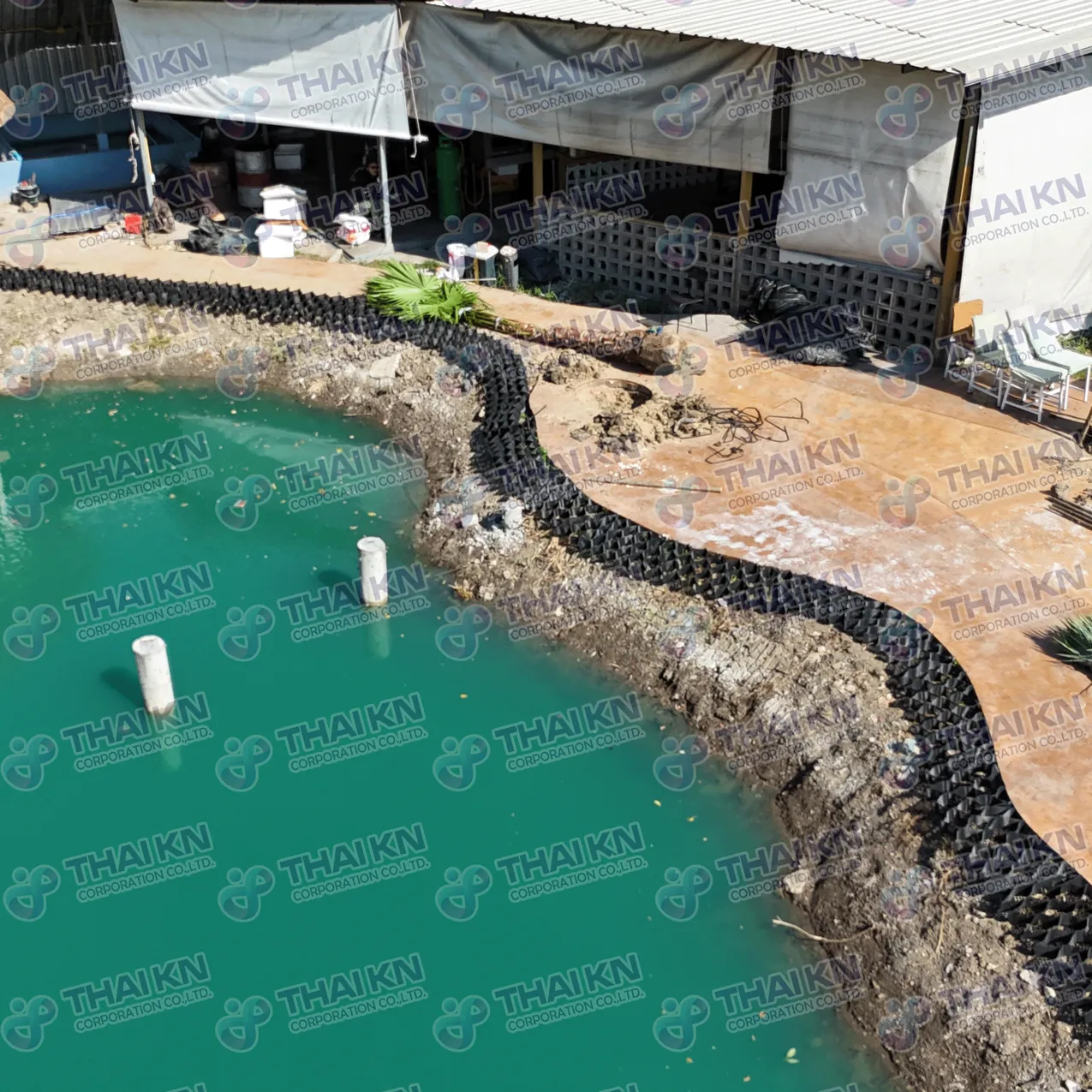
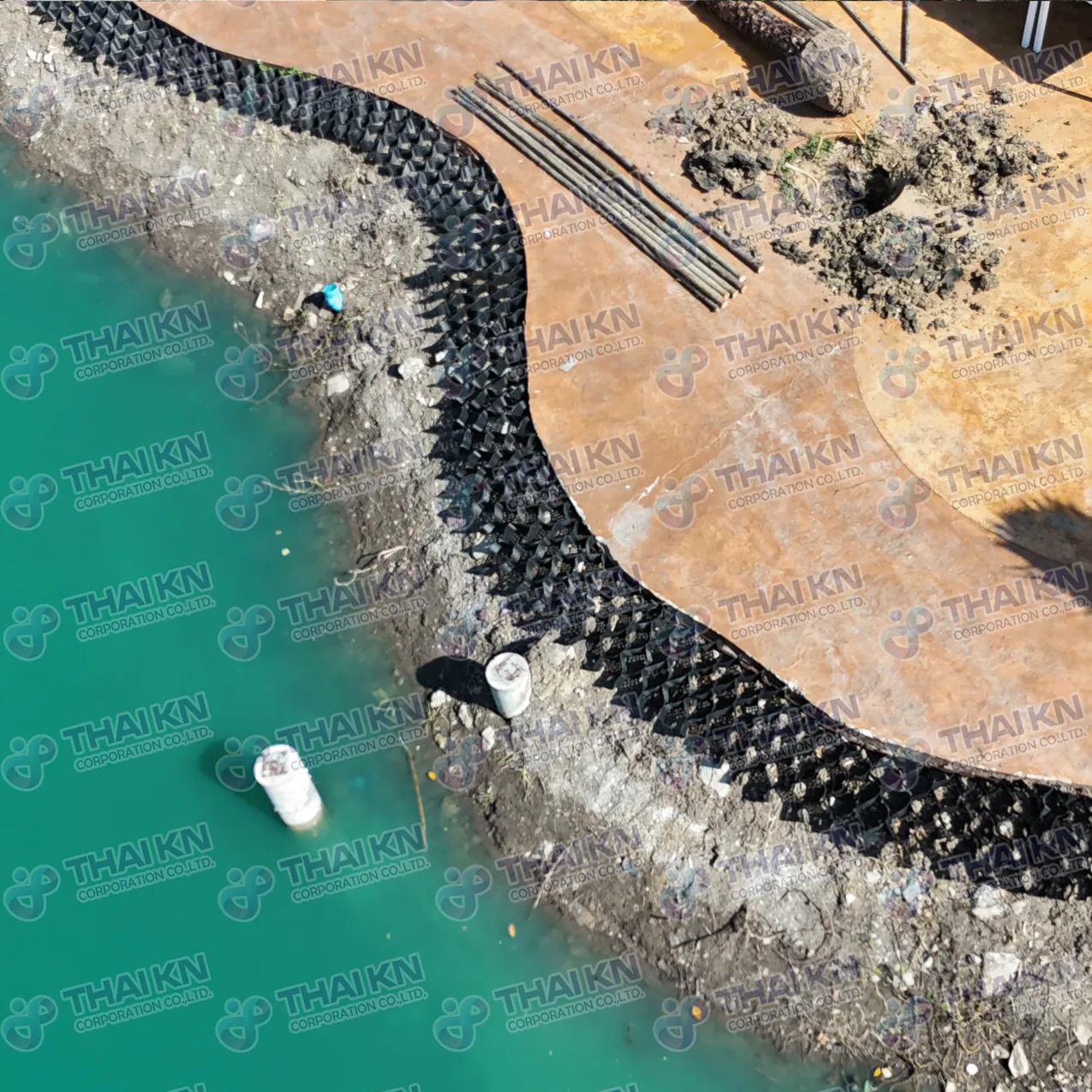
This project applied THAIKN™ GEOCELL, a three-dimensional honeycomb mesh, on the slope around a pond at a restaurant in the Min Buri area, Bangkok, to confine fill, reduce movement of surface material and support landscaping at the pond edge.
Project informationType of work: topsoil erosion control and landscapingInstallation area: the slope around the pondLocation: a restaurant in the Min Buri area, BangkokProduct: THAIKN™ GEOCELLUse: Erosion Control / Landscape ApplicationPurpose: to confine fill and control movement of material on the slope around the pond
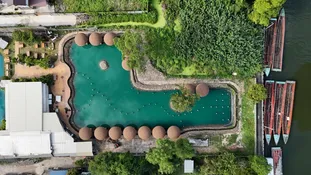
This project applied THAIKN™ GEOCELL, a three-dimensional honeycomb mesh, on the slope around a pond at a restaurant in the Min Buri area, Bangkok, to confine fill, reduce movement of surface material and support landscaping at the pond edge.
Challenge
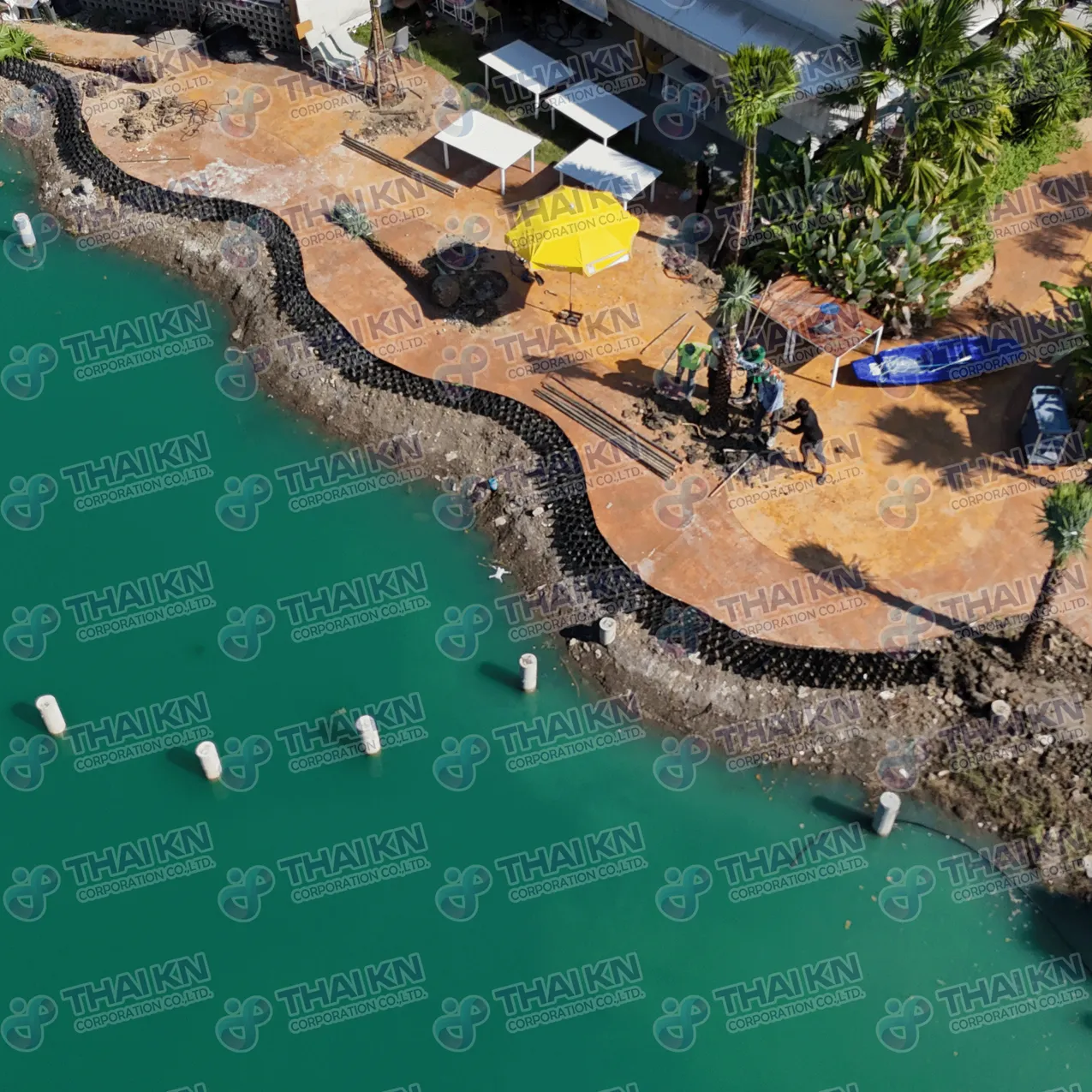
The pond edge is a continuous slope from the walkway down to the water level, so surface material can move down the slope, especially when affected by rain or water flowing over the ground.
If this continues, some of the topsoil or fill may be washed down to the lower area, the slope can lose its shape, and soil and sediment can build up at the pond edge.
For this project there was also another important factor: the area is part of the landscape inside the restaurant. The system chosen therefore needed to control material on the slope, while still allowing the area to be finished with soil, stone or plants so that it blends with the surroundings.
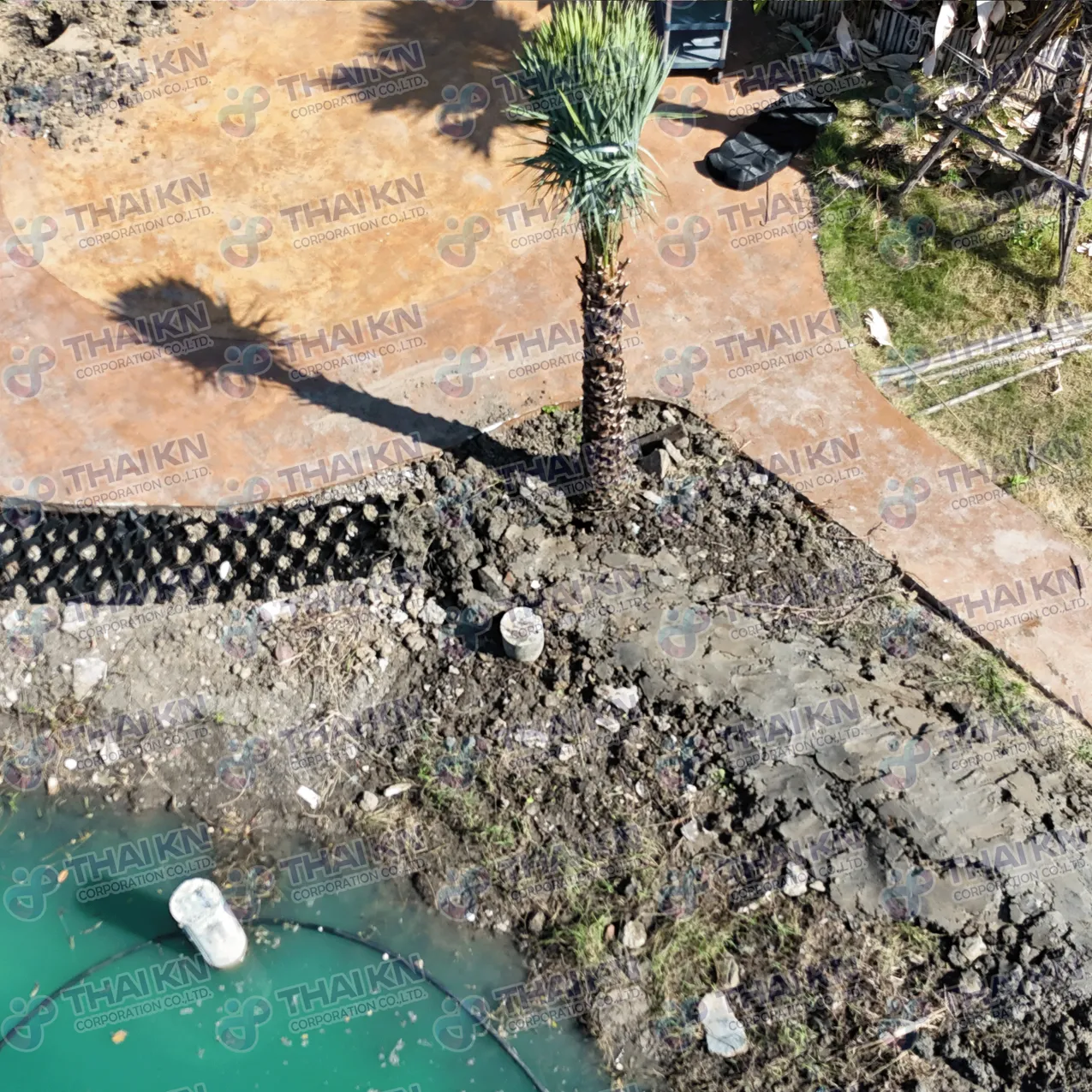
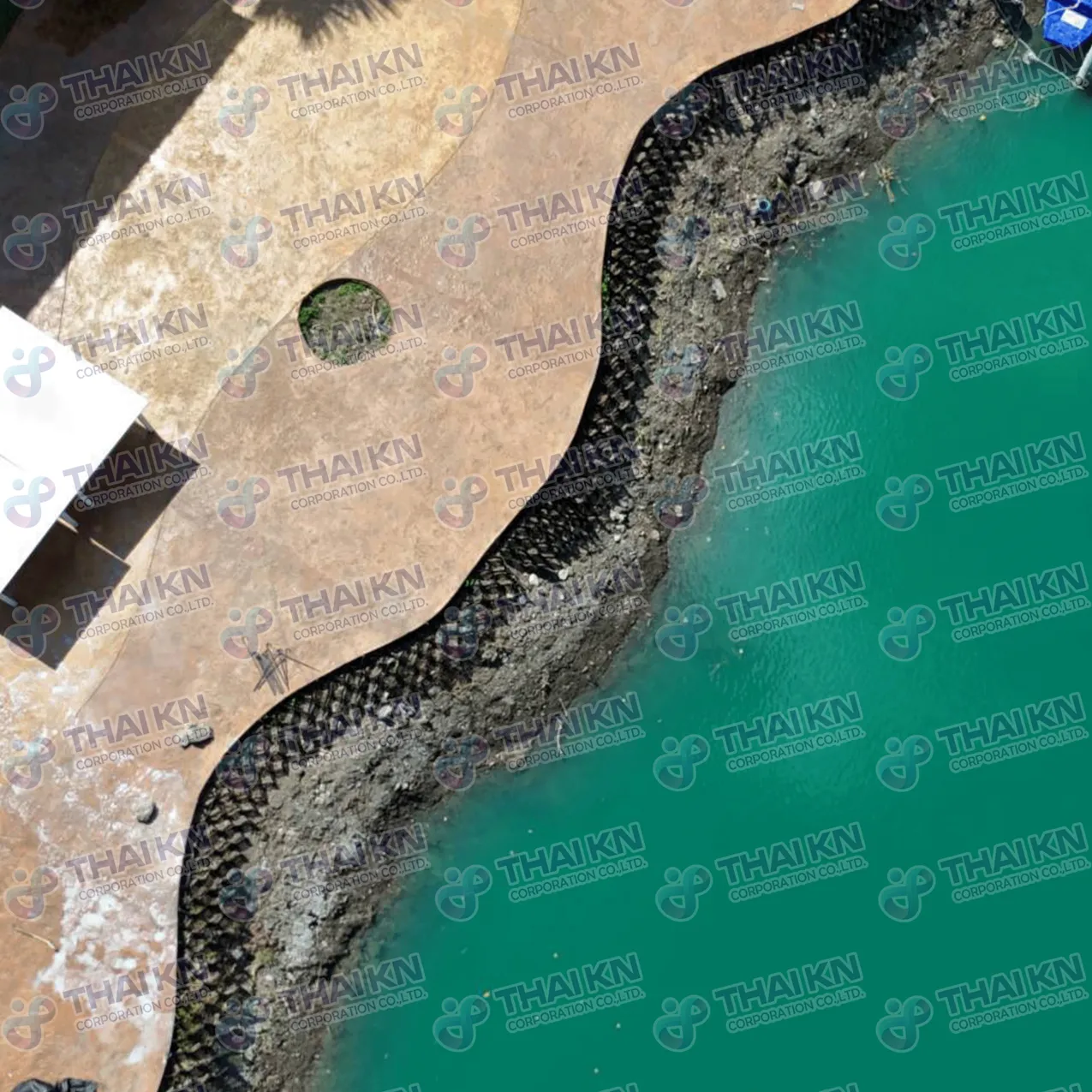
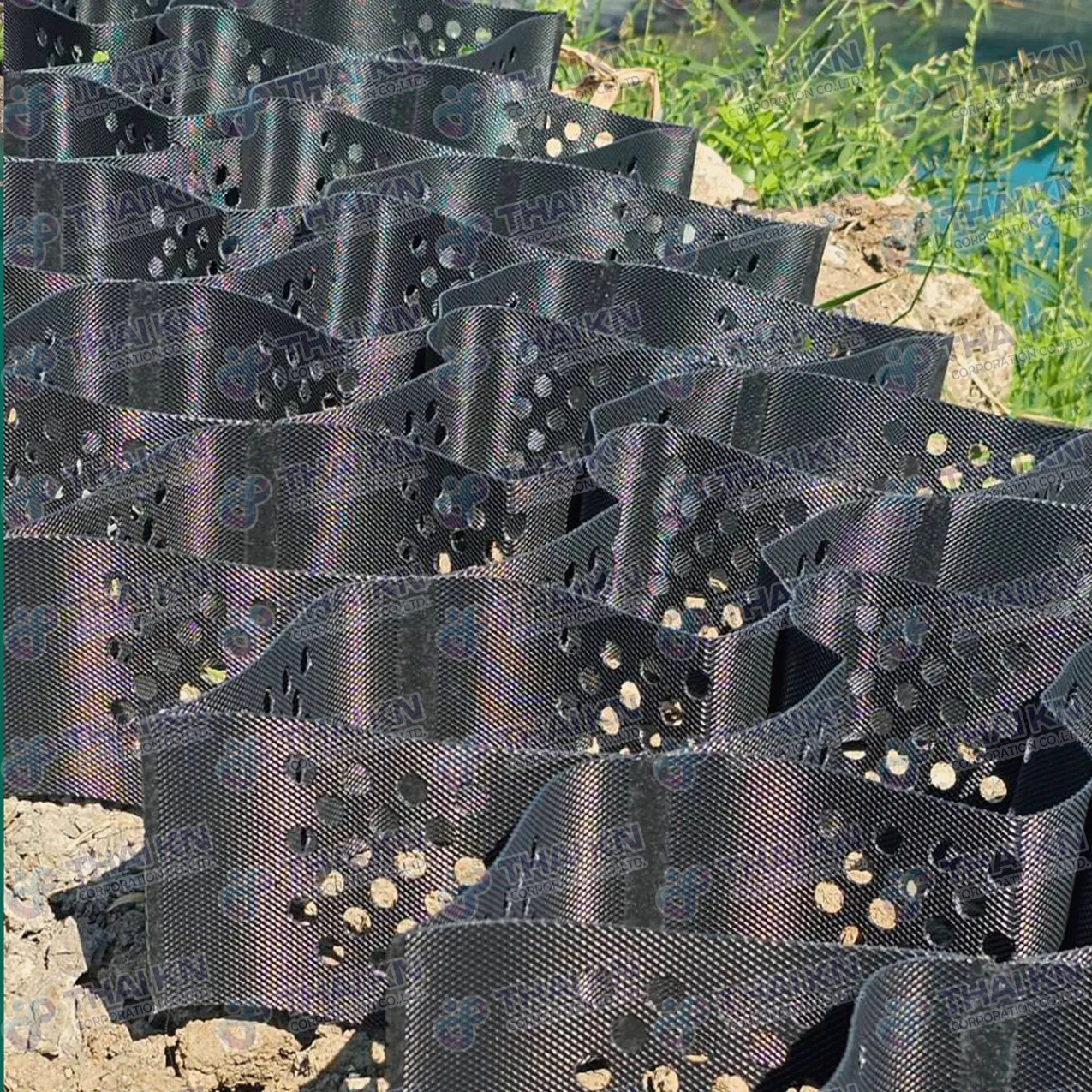
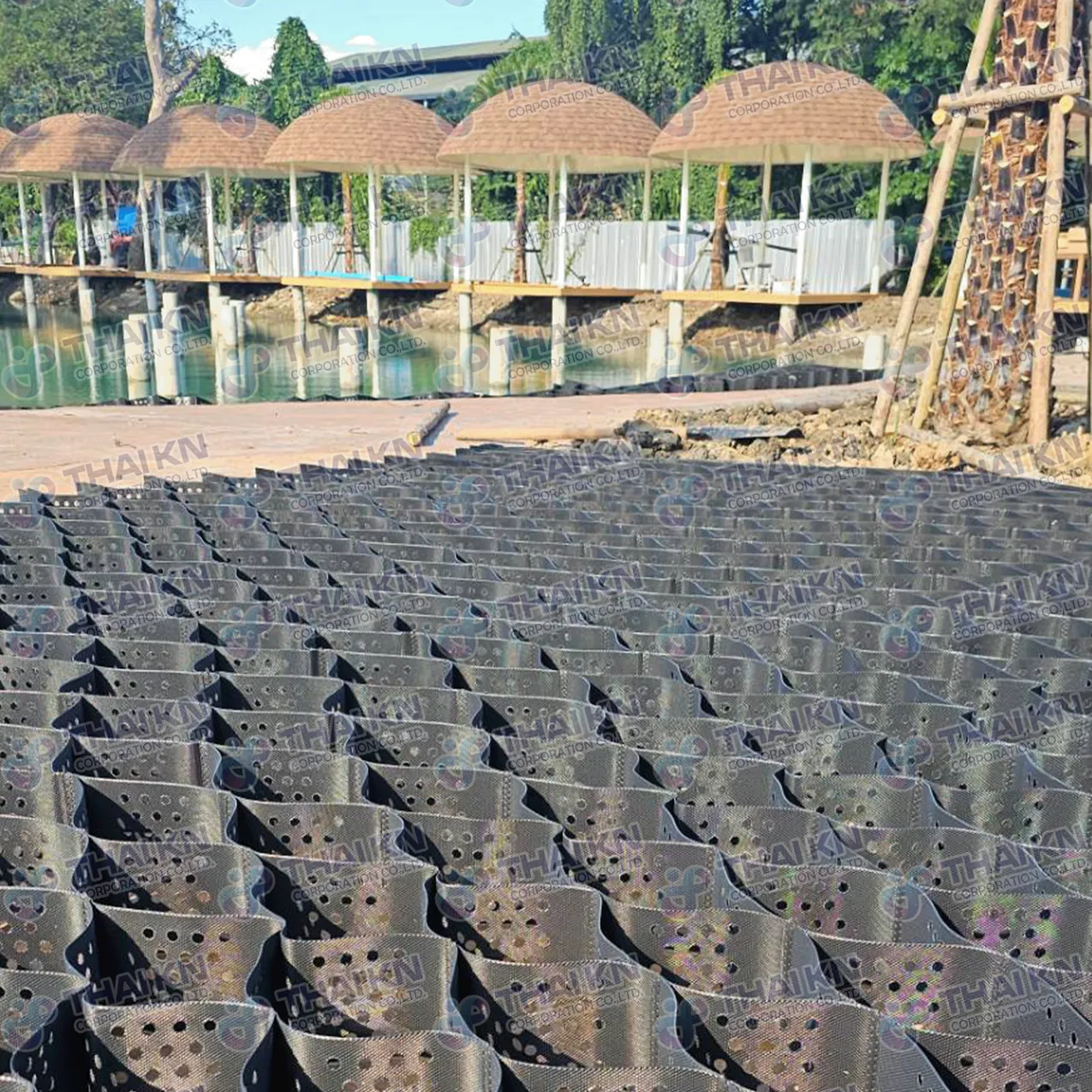
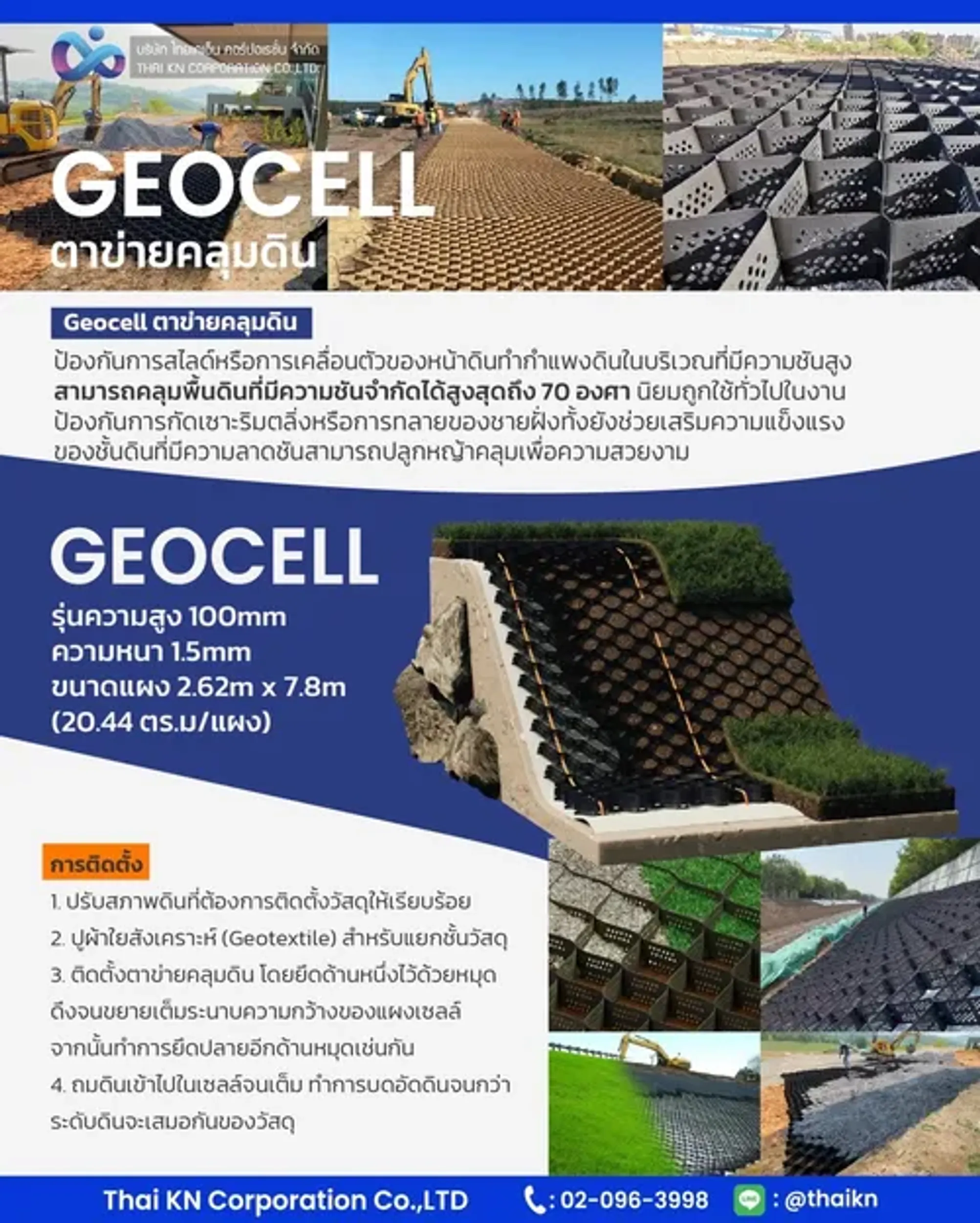
SolutionThe team selected THAIKN™ GEOCELL which has a three-dimensional honeycomb cell structure, expanded along the slope around the pond.Once the GEOCELL is expanded and secured in the right position, the structure of each cell confines and limits movement of the material inside the cell, helping the fill stay in place on the slope.
Inside the GEOCELL, the fill can be chosen to suit the design and site conditions, such as soil, planting medium or aggregate, and it can be used together with ground-cover plants where a green landscape is required.
On this pond project, GEOCELL therefore serves as a structure for controlling material on the slope, while the top surface can still be designed to blend with the restaurant landscape.
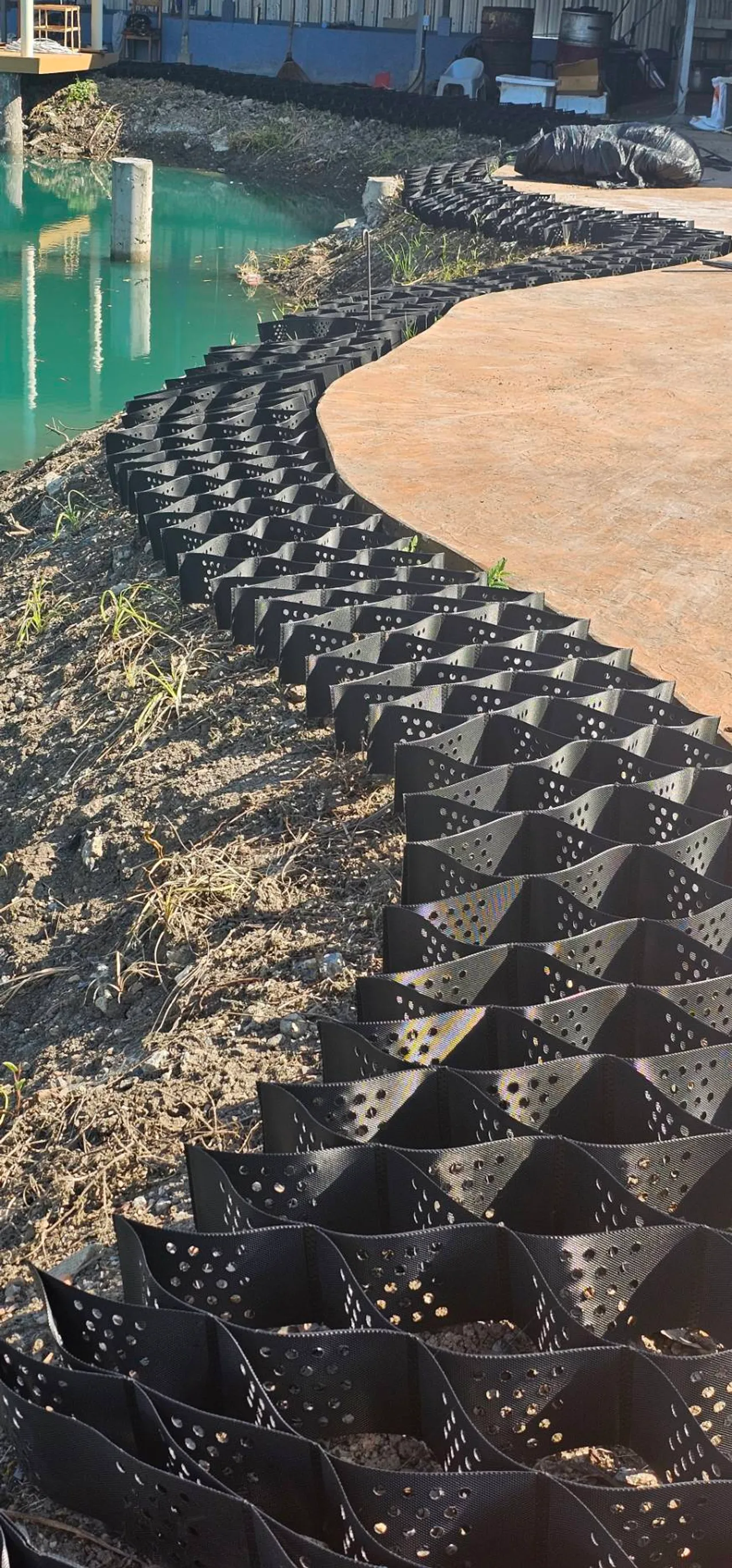
The team selected THAIKN™ GEOCELL which has a three-dimensional honeycomb cell structure, expanded along the slope around the pond.Once the GEOCELL is expanded and secured in the right position, the structure of each cell confines and limits movement of the material inside the cell, helping the fill stay in place on the slope.
Inside the GEOCELL, the fill can be chosen to suit the design and site conditions, such as soil, planting medium or aggregate, and it can be used together with ground-cover plants where a green landscape is required.
On this pond project, GEOCELL therefore serves as a structure for controlling material on the slope, while the top surface can still be designed to blend with the restaurant landscape.
The Results
After installation of the three-dimensional honeycomb mesh (GEOCELL) from THAIKN around the gas control station, the following concrete results were found:
- Permanent end to the landslide problem: The slope of the embankment could be maintained completely, even under changeable weather or heavy rain.
- Protecting structural safety: It helps reduce the risk of soil settlement around the gas-pipeline alignment and station buildings, so the infrastructure remains stable and safe over the long term.
- Lower maintenance cost (Cost & Time Efficiency): It reduces the need and the cost of hauling in soil for repairs, or of maintaining the site slopes every year.
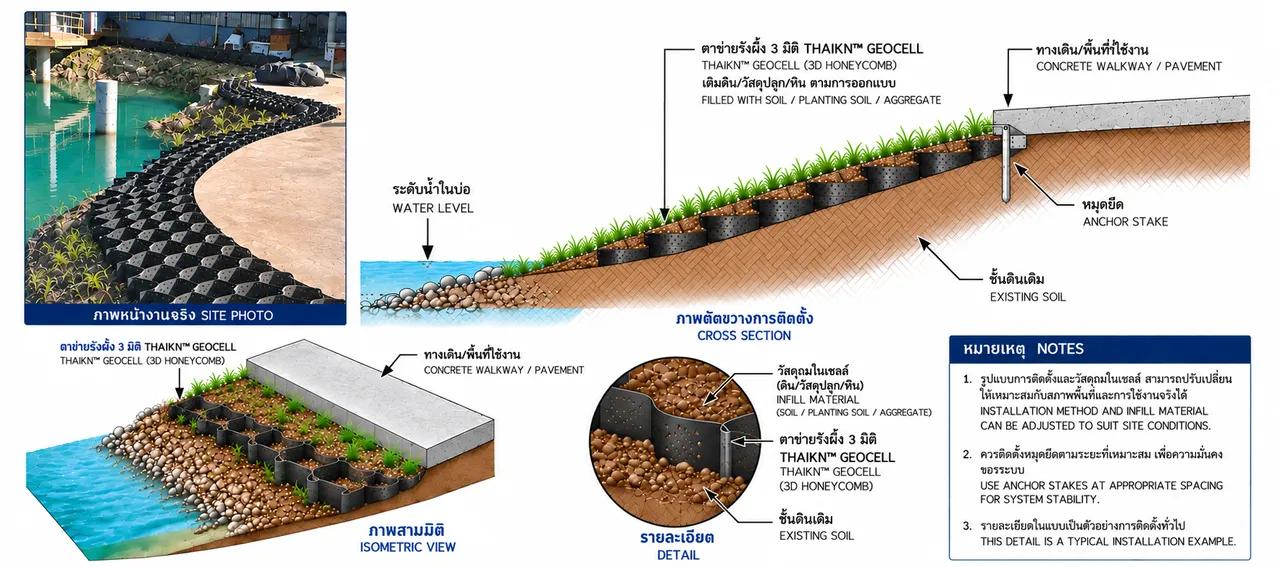
Site installation photos