





Case Study: Geotextile and Geogrid for Riverbank Walls
โพสต์เมื่อ : 18 พ.ย 2569 เวลา 11:43 น.
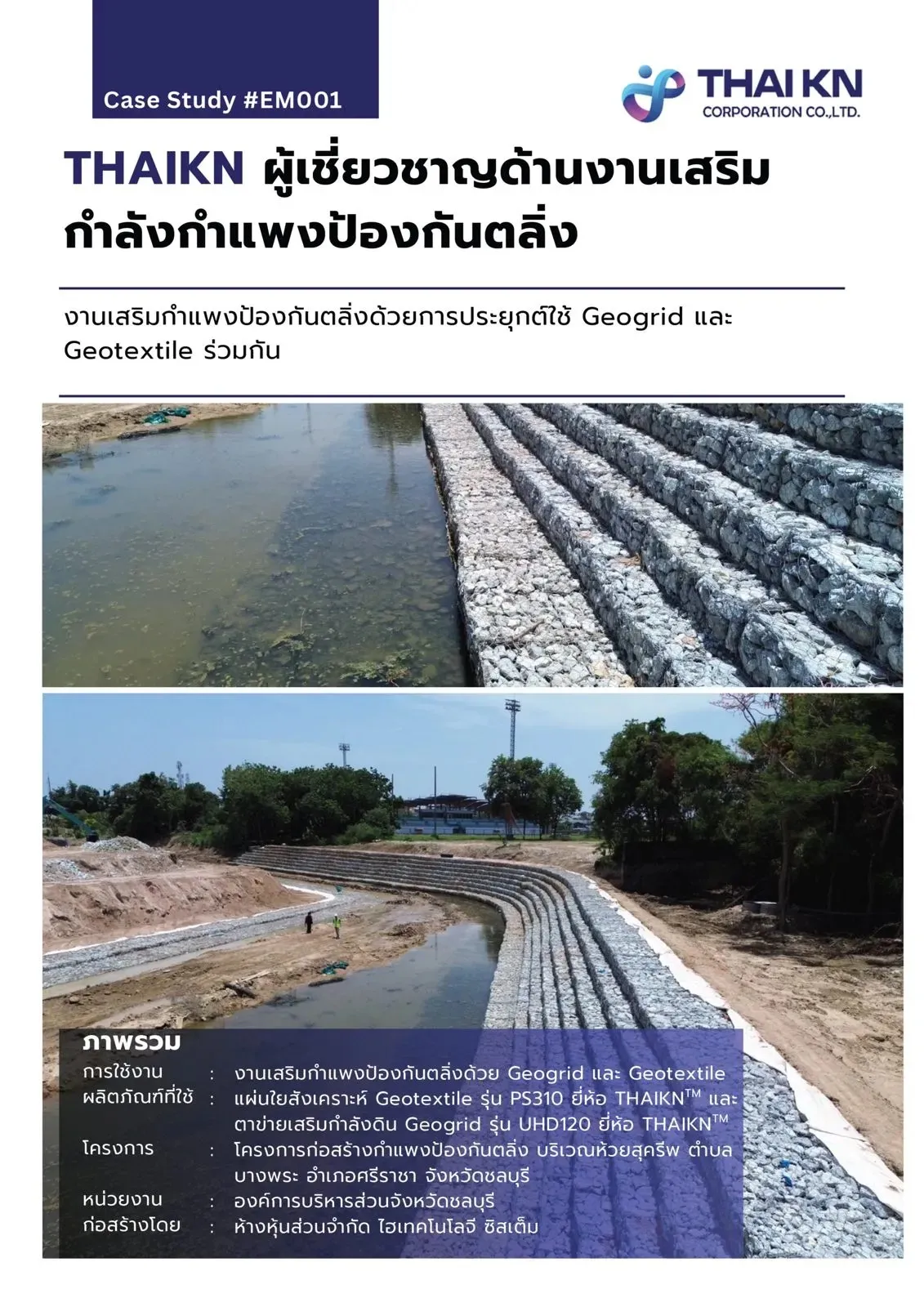
THAIKN A specialist in reinforcing riverbank protection walls
A project to reinforce a riverbank protection wall using GEOGRID and GEOTEXTILE together
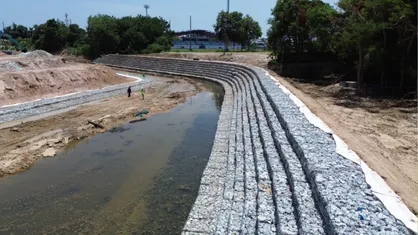
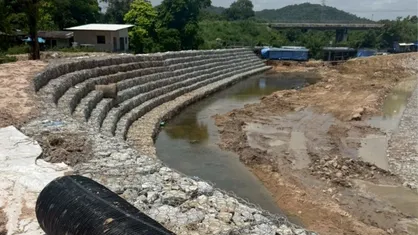
Reinforcement of a retaining-wall foundation
ProjectConstruction of a riverbank protection wall at Huai Sukhrip, Bang Phra subdistrict, Si Racha district, Chonburi province
Products used Geotextile THAIKN™ GEOTEXTILE model PS310 and a soil reinforcement geogrid THAIKN™ GEOGRID model UHD120
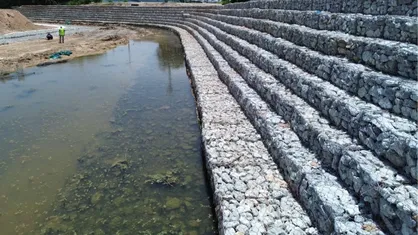
The banks of Huai Sukhrip often suffer from water erosion, especially in the rainy season when flood flows are strong, so bank soil can collapse into the channel and affect the safety of the nearby community and property. This project was therefore carried out to build a riverbank protection wall, using gabion boxes and a gabion mattress as the main structure, because they absorb water forces well and are more flexible than a typical concrete wall.
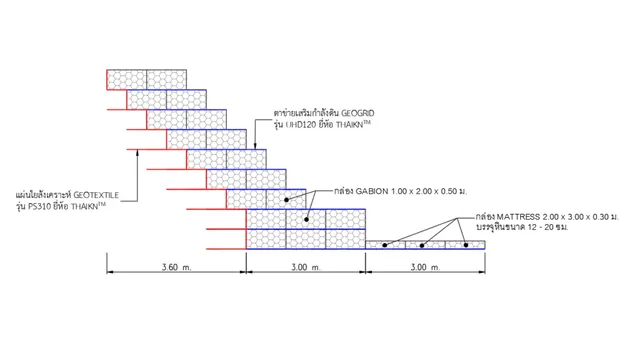
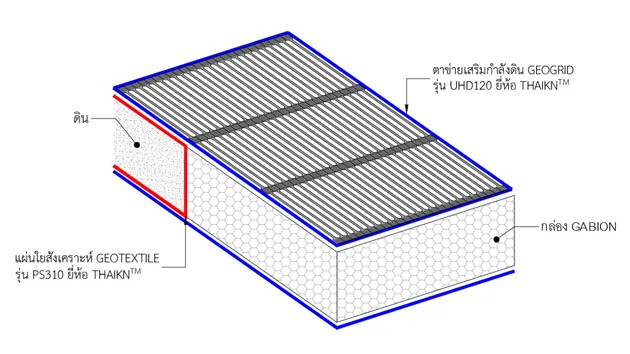
A notable feature of this project is the use of geosynthetic materials in the construction, namely THAIKN™ GEOGRID and THAIKN™ GEOTEXTILE each of which has its own role in improving the stability of the structure. The team selected the soil reinforcement geogrid THAIKN™ GEOGRID model UHD120 , manufactured from high-density polyethylene (HDPE), placed between the gabion boxes in each layer. It ties the stone boxes together so that every layer works as one mass, reducing the chance of sliding or separation of the boxes when they are subjected to water and earth pressure from behind.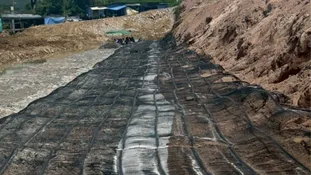
The banks of Huai Sukhrip often suffer from water erosion, especially in the rainy season when flood flows are strong, so bank soil can collapse into the channel and affect the safety of the nearby community and property. This project was therefore carried out to build a riverbank protection wall, using gabion boxes and a gabion mattress as the main structure, because they absorb water forces well and are more flexible than a typical concrete wall.
A notable feature of this project is the use of geosynthetic materials in the construction, namely THAIKN™ GEOGRID and THAIKN™ GEOTEXTILE each of which has its own role in improving the stability of the structure. The team selected the soil reinforcement geogrid THAIKN™ GEOGRID model UHD120 , manufactured from high-density polyethylene (HDPE), placed between the gabion boxes in each layer. It ties the stone boxes together so that every layer works as one mass, reducing the chance of sliding or separation of the boxes when they are subjected to water and earth pressure from behind.
A notable feature of this project is the use of geosynthetic materials in the construction, namely THAIKN™ GEOGRID and THAIKN™ GEOTEXTILE each of which has its own role in improving the stability of the structure. The team selected the soil reinforcement geogrid THAIKN™ GEOGRID model UHD120 , manufactured from high-density polyethylene (HDPE), placed between the gabion boxes in each layer. It ties the stone boxes together so that every layer works as one mass, reducing the chance of sliding or separation of the boxes when they are subjected to water and earth pressure from behind.
As for the geotextile, THAIKN™ GEOTEXTILE model PS310 was laid continuously behind the gabion boxes as a filter and separation layer, to keep fine soil from behind from washing into the stone boxes, while still preserving the voids between the stones so that the structure can drain water effectively. This reduces the risk of voids forming behind the wall and improves the long-term stability of the wall.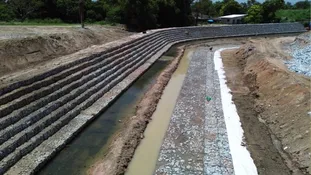
As for the geotextile, THAIKN™ GEOTEXTILE model PS310 was laid continuously behind the gabion boxes as a filter and separation layer, to keep fine soil from behind from washing into the stone boxes, while still preserving the voids between the stones so that the structure can drain water effectively. This reduces the risk of voids forming behind the wall and improves the long-term stability of the wall.
The results
Built by combining a natural material such as stone with a modern engineering material such as a geosynthetic, the structure is strong, flexible and in keeping with its surroundings. This riverbank protection wall not only prevents soil collapse, but also helps make the riverside community safer and more confident about future use of the area.