




End Rainy-Season Surface Collapse and Landslides
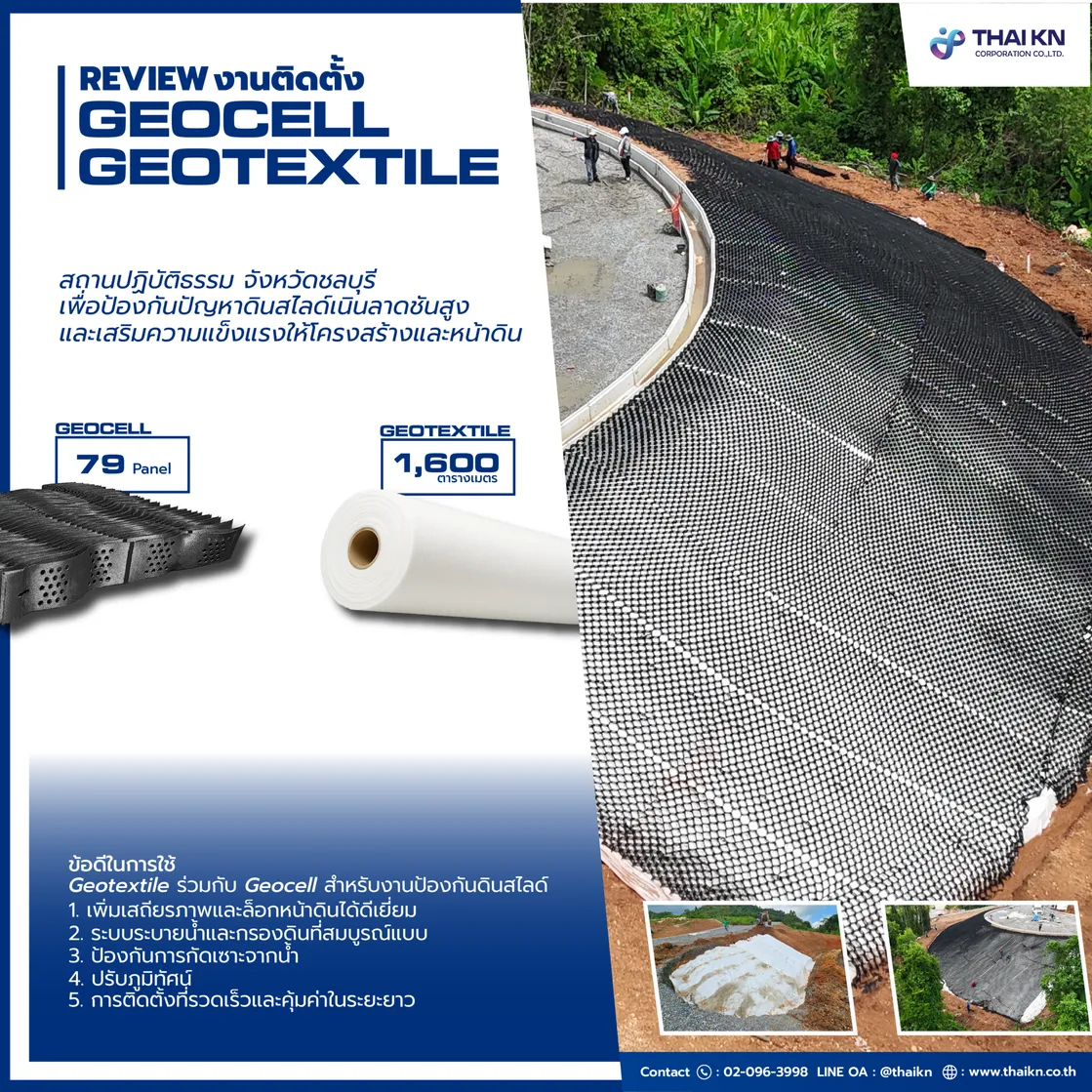
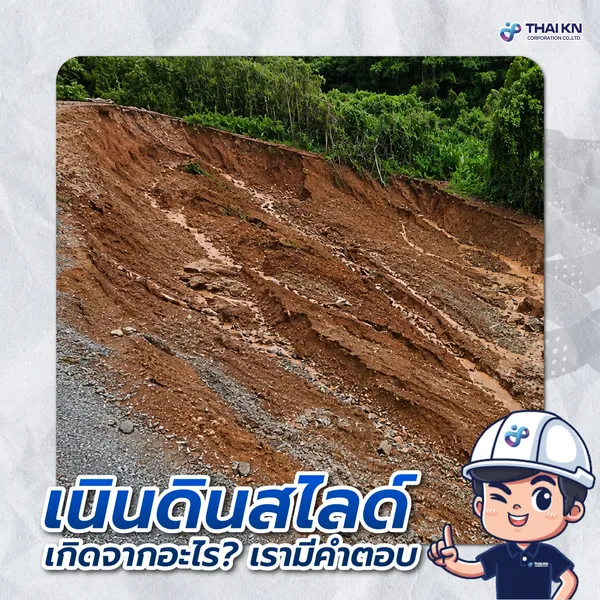
When the rainy season arrives, what follows for sloping areas is "landslides and surface soil collapse". Continuous rainfall washes away the surface soil, directly affecting the road shoulder structure and causing damage, settlement or even collapse. This not only means repeated repair costs but may also endanger people and nearby structures.
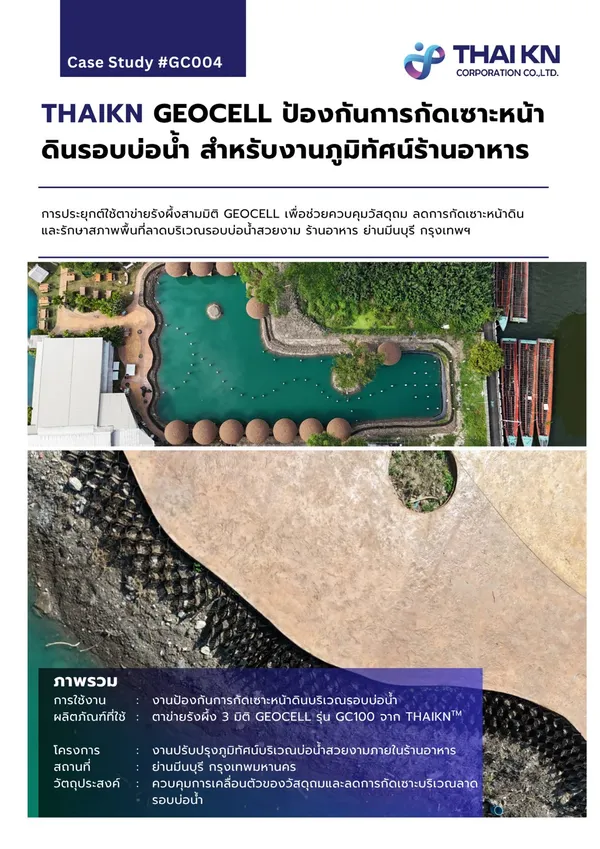
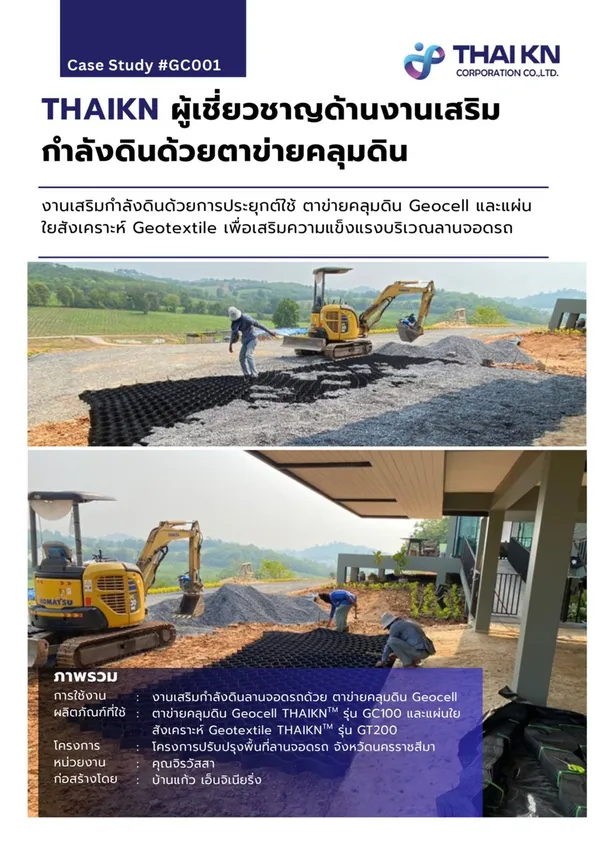
These problems can be prevented and solved sustainably with sound engineering principles, namely choosing materials designed specifically for soil reinforcement, such as combining THAIKN™ GEOCELL and THAIKN™ GEOTEXTILE.
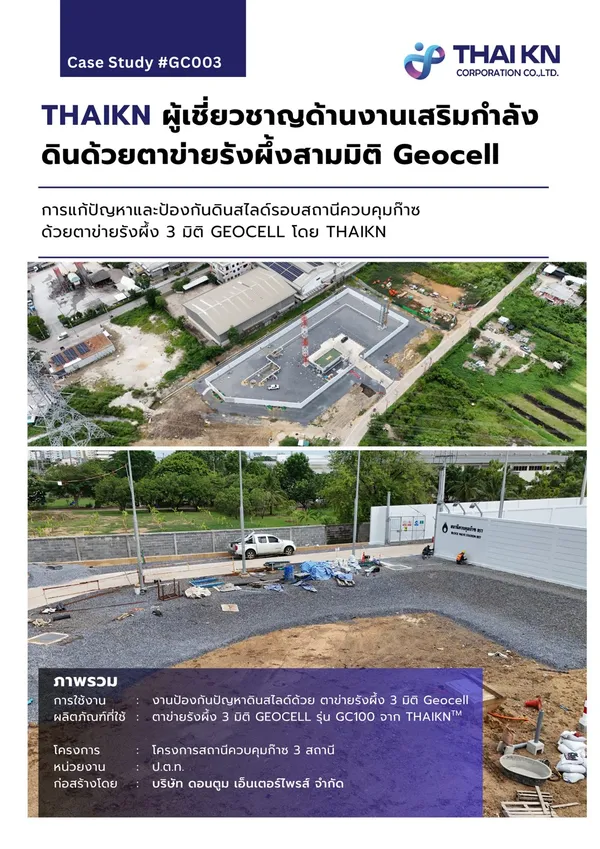
To give a clear example, this article presents a real installation by THAIKN CORPORATION at a meditation center project in Chonburi province, where the site is a steep slope. The project chose the THAIKN™ GEOCELL system, 79 panels (Panels), installed together with 1,600 square meters of THAIKN™ GEOTEXTILE to solve the landslide problem and decisively strengthen the structure.
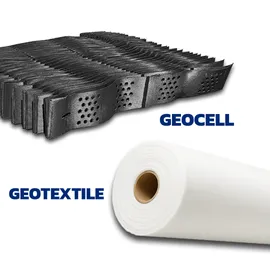
Get to know the key materials: what do THAIKN™ GEOCELL and THAIKN™ GEOTEXTILE do?
To understand why this system is so effective, we need to look at the role of each material when used on a slope.
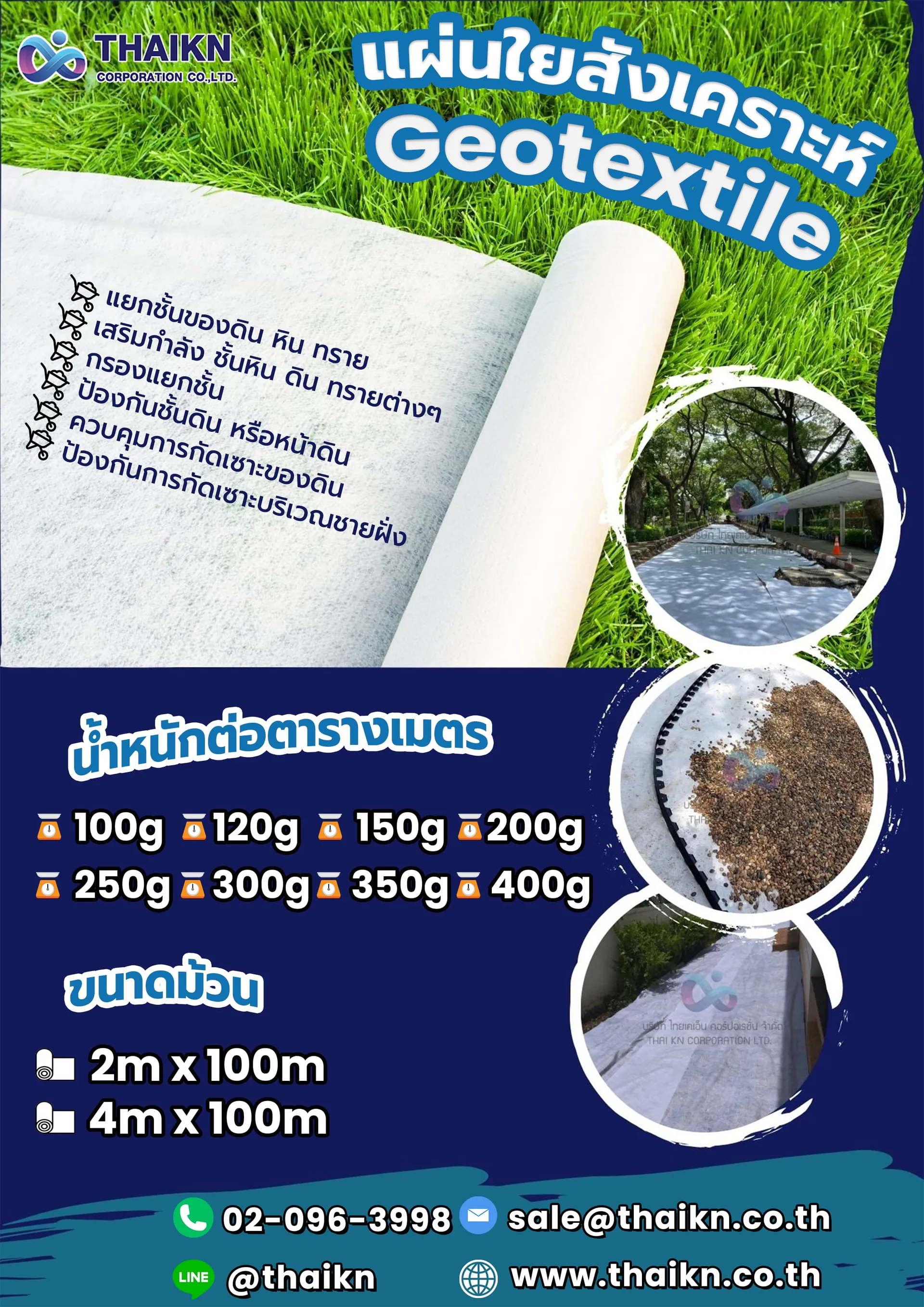
1. THAIKN™GEOTEXTILE (geosynthetic fabric for earthworks) is like the first line of defense that protects and organizes the soil layer structure. This geosynthetic sheet has the following key properties:
Separates material layers: prevents the existing soil from mixing with the new fill, helping the soil layers keep their strength.
Filters and drains water: this is a very important property in the rainy season. The fabric lets water pass through easily but retains soil particles so they are not carried away by the water, which helps reduce water pressure beneath the soil surface (Hydrostatic Pressure), a main cause of soil swelling and settlement.
Increases stability: helps distribute loads and reduce settlement of the foundation supporting the structure above.
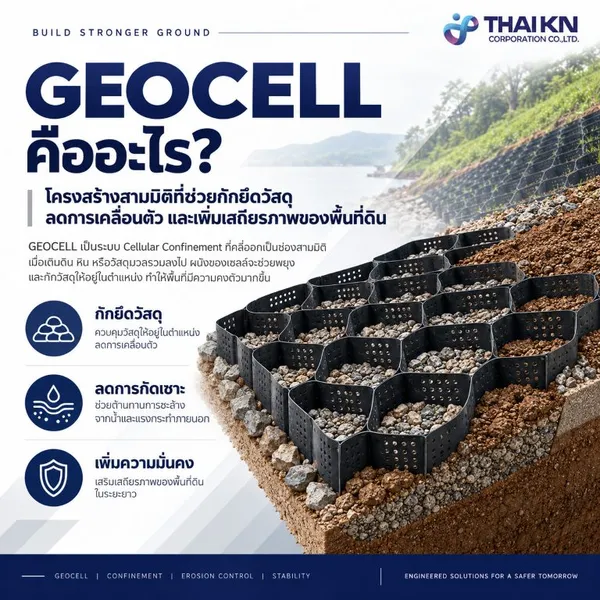
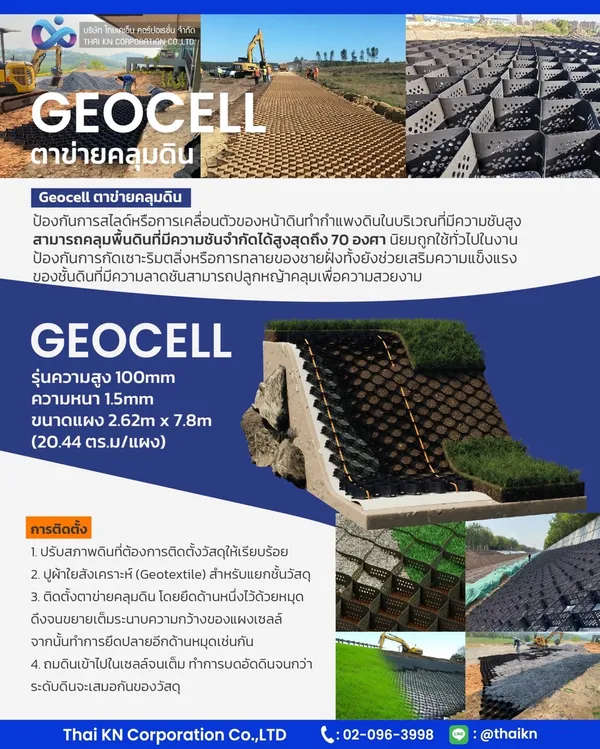
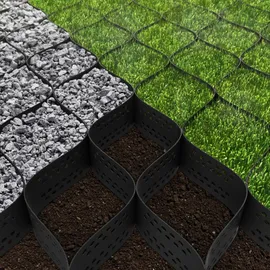
2. THAIKN™GEOCELL (3D honeycomb cellular grid system) If THAIKN™ Geotextile is the foundation, THAIKN™ Geocell is the protective armor on top. It has honeycomb-like cells, and when expanded and laid on a slope it has the following properties:
Holds the soil mass in place: each cell wraps around and confines the material (such as soil, stone or sand) inside, preventing the soil from flowing or moving downhill under gravity.
Distributes forces evenly: the 3D structure distributes loads and impacts, making the slope noticeably more stable.
Resists washout: when rain falls or water flows over the surface, the honeycomb grid slows the water and reduces its impact, so the topsoil is not washed away.
The power of combined action (Synergy Effect): when the two materials work together, their performance is multiplied. THAIKN™ GEOTEXTILE is laid as the bottom layer to support, filter material and drain groundwater, and then the THAIKN™ GEOCELL system is installed on top to hold the topsoil and distribute loads.
Combining them in this way makes the landslide protection system complete, strong and weather-resistant, and helps extend the service life of the slope or road shoulder for a long time and in the most cost-effective way.
Correct installation steps and methods for slopes
For both materials to perform at their best, the installation process is extremely important. The standard installation method for this type of site consists of the following steps:
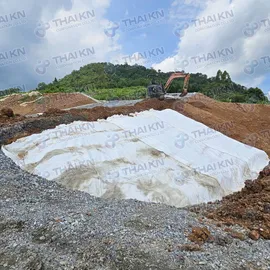
Step 1: Laying the GEOTEXTILE
After preparing the soil surface, start by laying the GEOTEXTILE over the slope.
The roll must be unrolled vertically (from top to bottom along the slope), pulled taut and laid in close contact with the soil surface, covering the entire area where the Geocell system will be installed.
Step 1: Laying the GEOTEXTILE
After preparing the soil surface, start by laying the GEOTEXTILE over the slope. The roll must be unrolled vertically (from top to bottom along the slope), pulled taut and laid in close contact with the soil surface, covering the entire area where the Geocell system will be installed.Step 2: Expanding and anchoring the GEOCELL panels
Expand the GEOCELL panels vertically to their full size, laying them over the GEOTEXTILE already in place. Anchor the Geocell panels firmly to the ground by driving steel J-Pins at the points specified by the engineer, to prevent the grid from moving. Where the area is large and several Geocell panels are needed, connectors called Connectors must be used to lock the panels together into a single sheet, for the strength of the overall structure.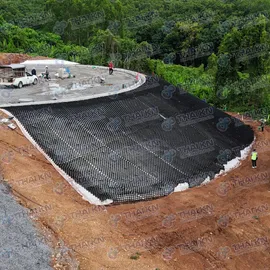
Step 3: Infilling material (Infilling)
Once the grid is firmly anchored, the final step is to pour the prepared material into the honeycomb cells of the Geocell.
The infill material can be chosen to suit the purpose of the project, whether soil (for planting grass to cover the surface), crushed stone, sand, or even concrete for maximum strength.
Spread the material to fill every cell and compact it firmly according to the standard.
Step 3: Infilling material (Infilling)
Once the grid is firmly anchored, the final step is to pour the prepared material into the honeycomb cells of the Geocell. The infill material can be chosen to suit the purpose of the project, whether soil (for planting grass to cover the surface), crushed stone, sand, or even concrete for maximum strength. Spread the material to fill every cell and compact it firmly according to the standard.Conclusion
Landslides and road shoulder collapse no longer need to be repaired over and over again if we understand how water and soil behave and choose engineering materials such as THAIKN™GEOTEXTILE and THAIKN™GEOCELL to manage them. The meditation center project in Chonburi province by THAI KN Corporation Co., Ltd. is clear proof that investing in a standard-compliant protection system from the start truly guarantees safety, reduces maintenance costs, and builds confidence for every slope.
Installation photos
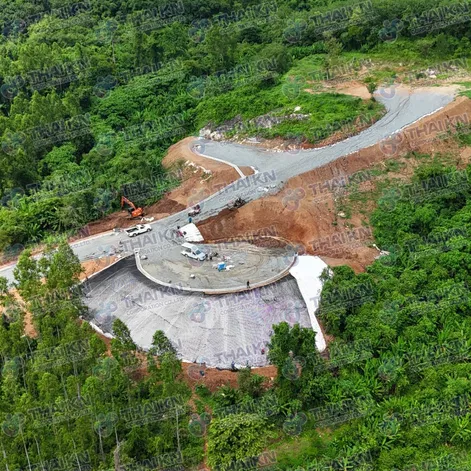
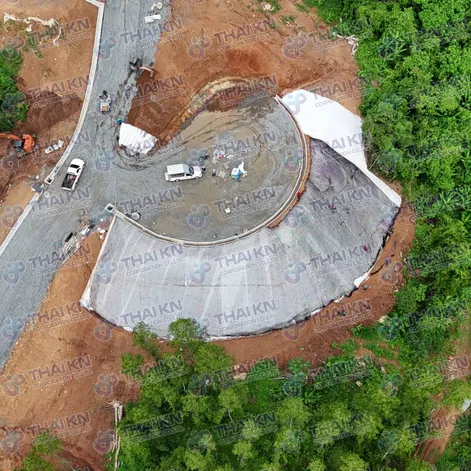
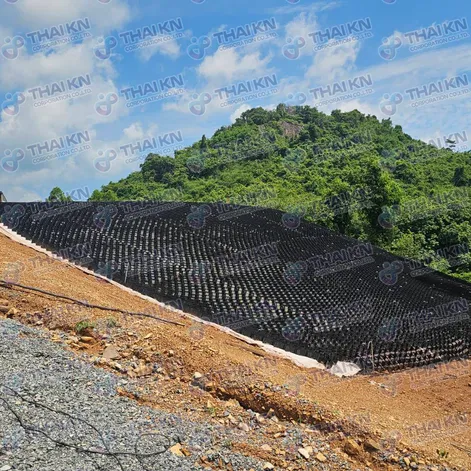
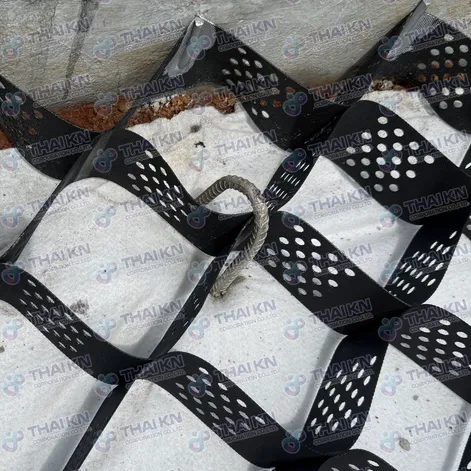
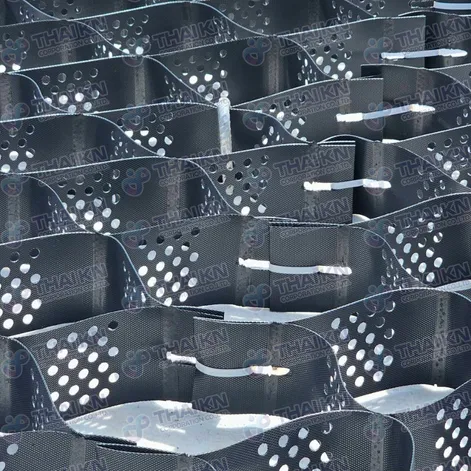
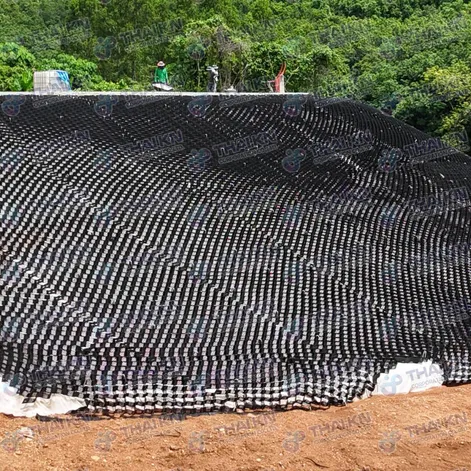
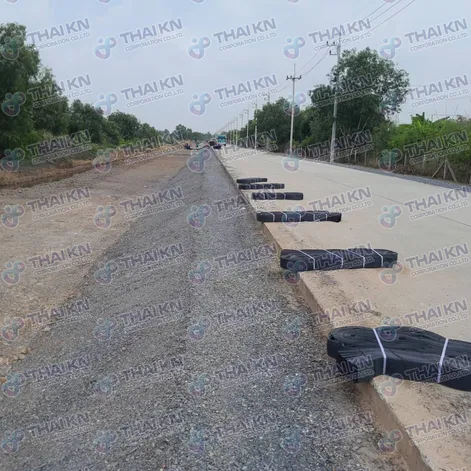
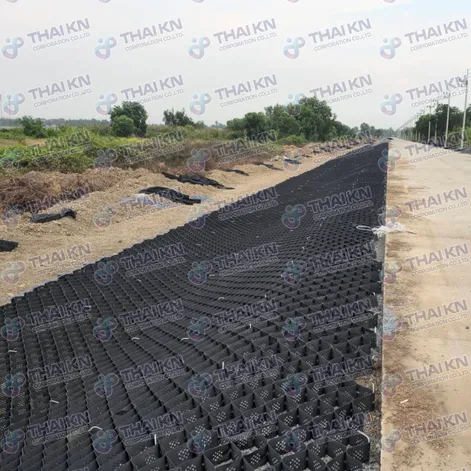
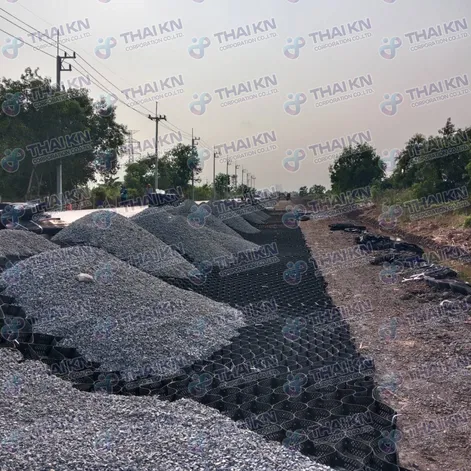
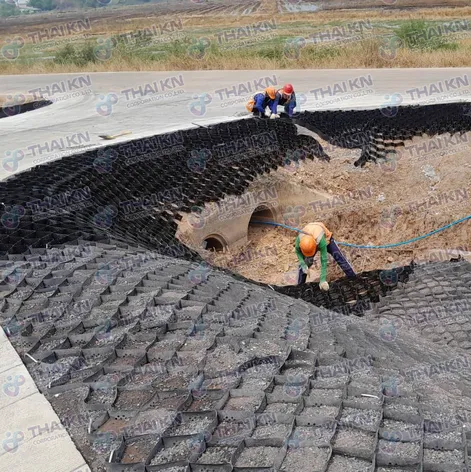
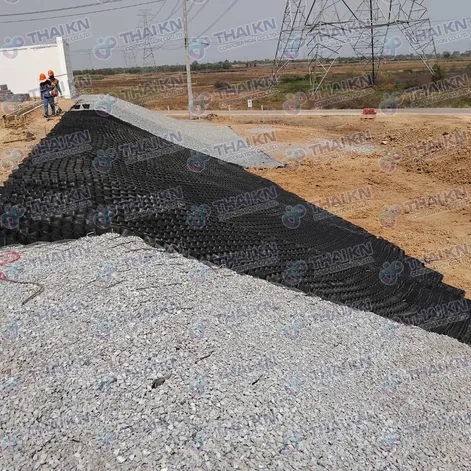
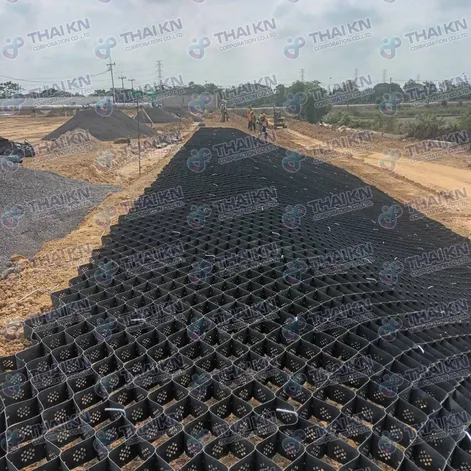
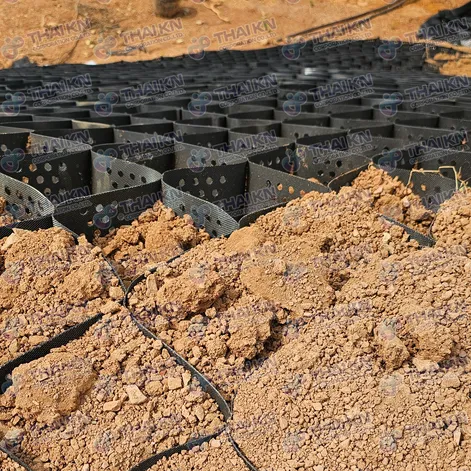
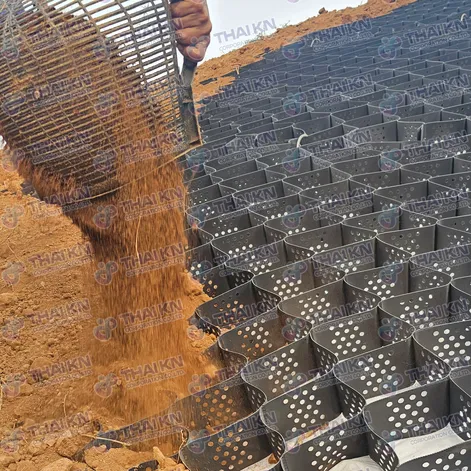
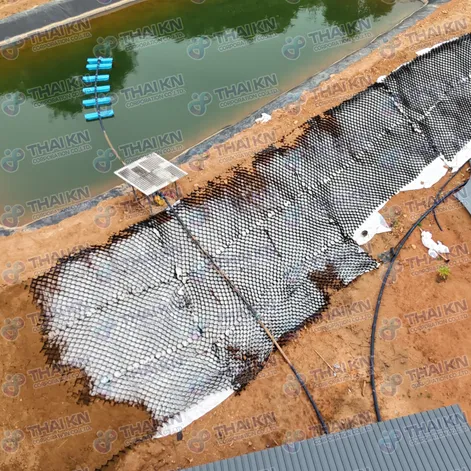
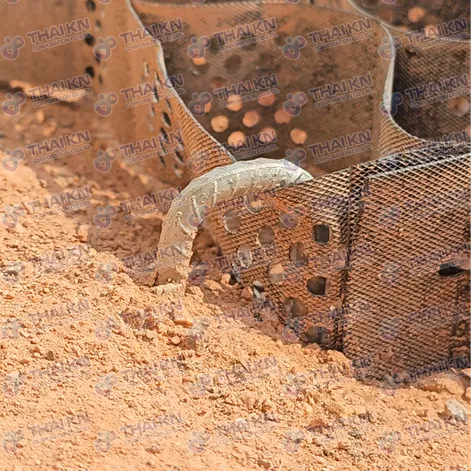
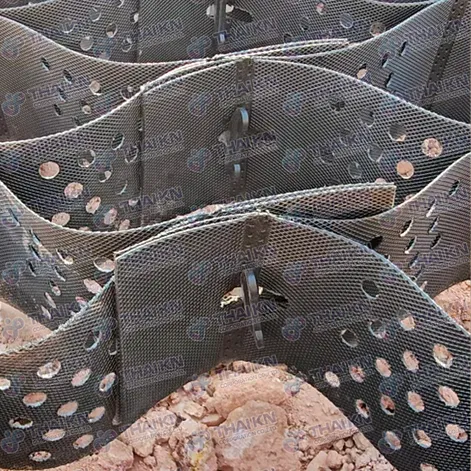
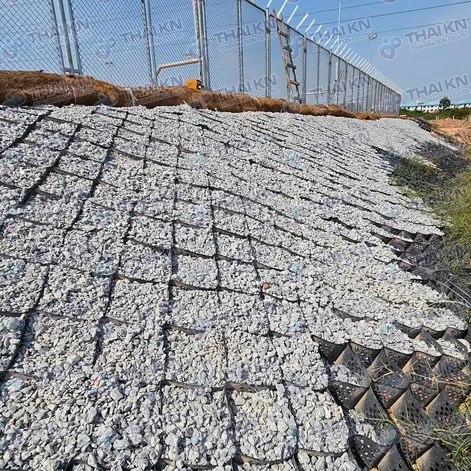
Installing THAIKN™GEOCELL and THAIKN™GEOTEXTILE

Line OA : @thaikn
Tel : 02-096-3998, 063-467-9666, 063-401-9888
Email : sale@thaikn.co.th
Website : www.thaikn.co.th
#GEOTEXTILE #Geogrid #thaikn #Geocell #GCL #Geomembrane #HDPEGeomembrane #Landscaping #PondLining #DIYLandscaping #MinimalistGarden
Related Geocell articles and projects
Read more about slope landslide protection and soil reinforcement, and see real installation examples by THAI KN