



Why Geosynthetic Clay Liners (GCL) Are Worth Using
What are Geosynthetic Clay Liners (GCL)?
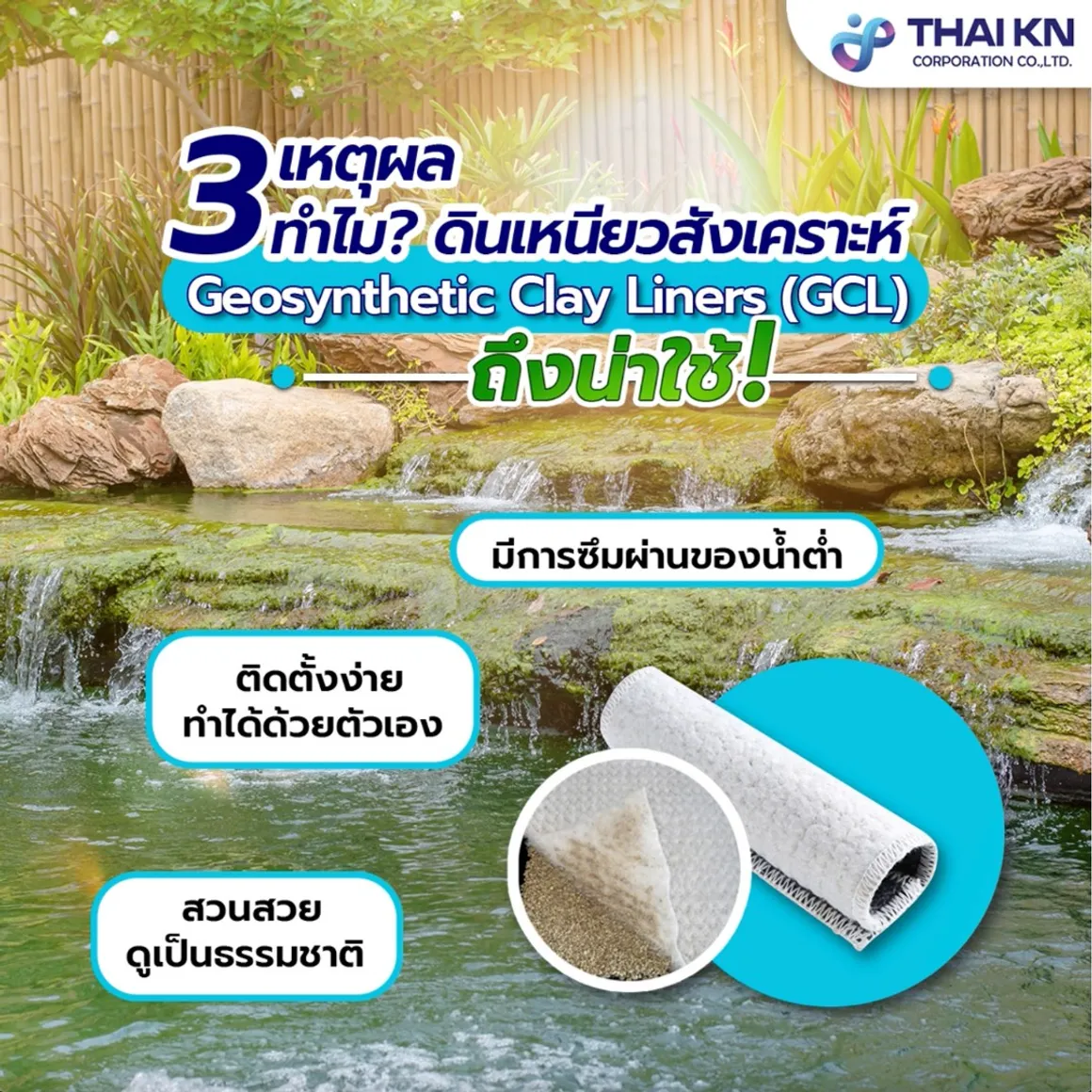
is a material with very low water permeability, used in the same way as HDPE Sheet. However, when an HDPE Sheet is torn, it can no longer hold water, whereas GCL contains clay inside; if it is torn, the clay can flow in and plug the leak by itself, so there is no need to worry about maintenance. It is especially suitable for farmers, and aquatic plants can grow naturally on it. It does have disadvantages, however: a relatively high cost, a longer installation time, higher transport costs than HDPE Sheet because of its heavy weight, and the need to supply soil to cover the GCL sheet afterwards. Today, government projects have started to use GCL more and more.
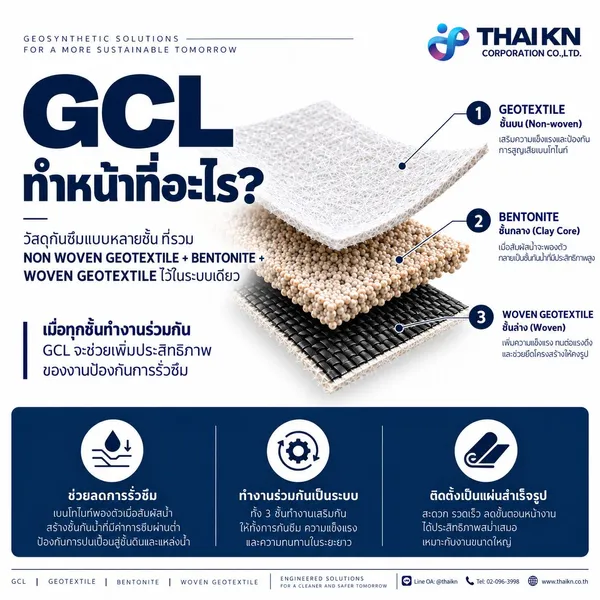
A Geosynthetic Clay Liner, or GCL for short, is made from bentonite (bentonite) with layers of woven (Woven) and non-woven (Non-Woven) geosynthetic sheets bonded together with fibers (Needle – Punched). The core is a special natural sodium bentonite powder or granules, enclosed on both sides by non-woven or woven geosynthetic sheets and formed into a geosynthetic clay sheet by needle punching. It is strong, resists in-plane shear well, and prevents liquid permeation well over the long term thanks to the swelling of sodium bentonite, which can expand up to 24 times. The sheet can seal small leaks and repair itself, as the bentonite granules swell and merge, providing its liquid-barrier properties.
Benefits of geosynthetic clay liner: GCL
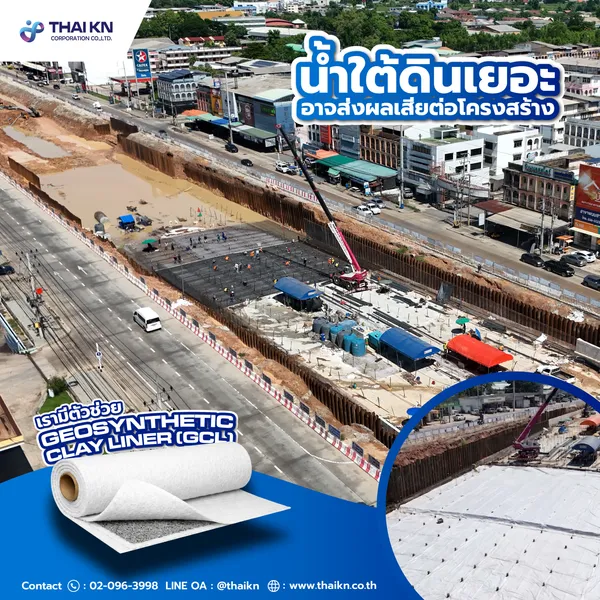
• Generally used to prevent water leakage
• Used instead of compacted clay layers for leakage prevention
• Increases landfill volume in landfill sites
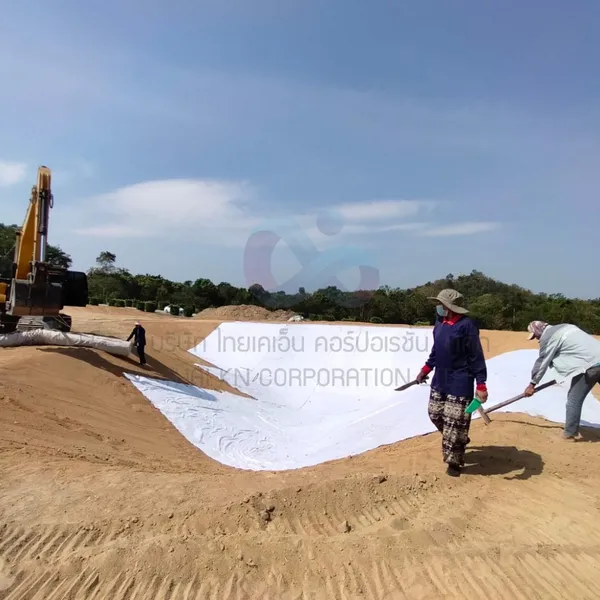
• Easy to install
• Less dependent on weather during installation. Projects that commonly use geosynthetic clay liner (GCL):
• Solid waste landfills
• Wastewater treatment ponds
• Raw water storage ponds
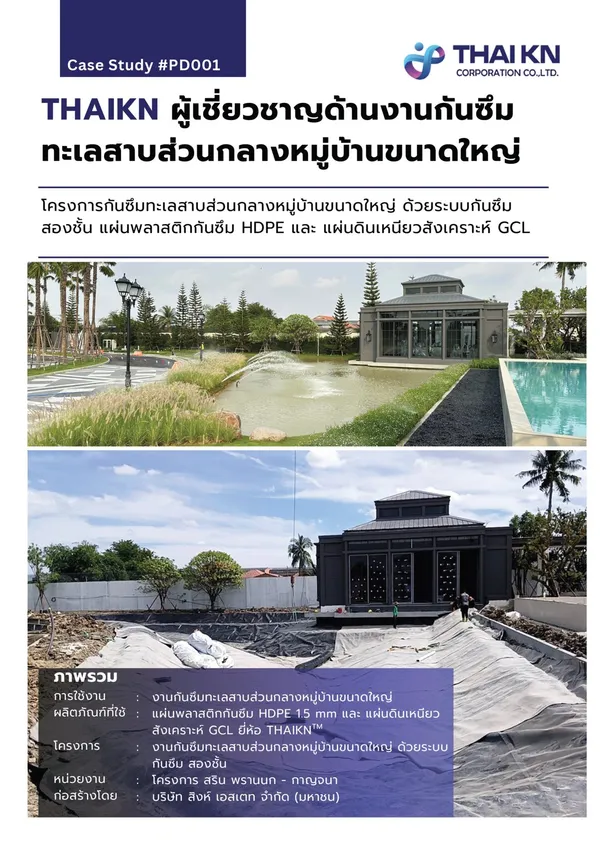
• Used with plastic sheets to increase performance and prevent leakage
• Canals, dams

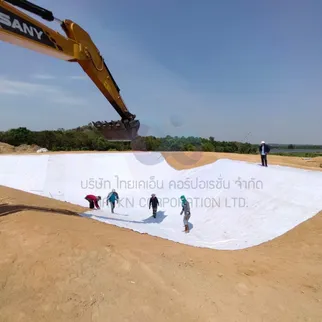
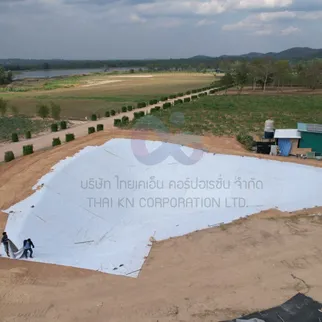
Installing GCL model 4000g, water storage pond, Chonburi province


Installing GCL model 4000g, decorative water storage pond, resort, Krabi province


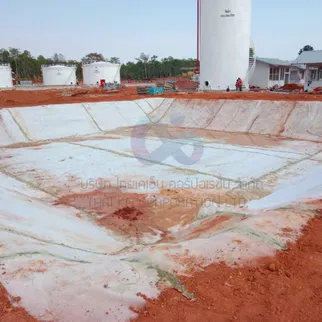
Installing GCL model 4000g, water storage pond lining at an airfield, Khon Kaen province


Installing GCL model 4000g, realistic waterfall landscaping, Chiang Mai province


Installing GCL model 4000g, water storage pond, Udon Thani province


Installing GCL model 4000g, realistic waterfall landscaping, community mall, Bangkok

Line OA : @thaikn
Tel : 02-096-3998, 063-467-9666, 063-401-9888
Email : sale@thaikn.co.th
Website : www.thaikn.co.th
#GEOTEXTILE #Geogrid #thaikn #Geocell #GCL #Geomembrane #HDPEGeomembrane #Landscaping #PondLining #DIYLandscaping #MinimalistGarden
Related GCL articles and projects
Read more about waterproofing and see real installation examples by THAI KN