




Why does GEOCELL need to be used with NON-WOVEN GEOTEXTILE? Solving parking-lot ruts and stone sinking into the soil with a two-layer system
Dirt yards with vehicles entering and leaving every day often suffer settlement, wheel ruts and standing water. Many people therefore choose GEOCELL to help confine the stone. But on THAIKN parking-lot sites, the team did not use GEOCELL alone. They first laid NON-WOVEN GEOTEXTILE underneath on both sites, because the two materials have different functions and help the system work better together.
The problem of parking lots on existing soil: why does the stone that was spread disappear?
Yards used continuously for parking and vehicle traffic often show ground settlement, wheel ruts and standing water, especially in the rainy season, and the stone that was spread sinks and is lost into the subgrade very quickly, so more stone has to be added and maintenance repeated.
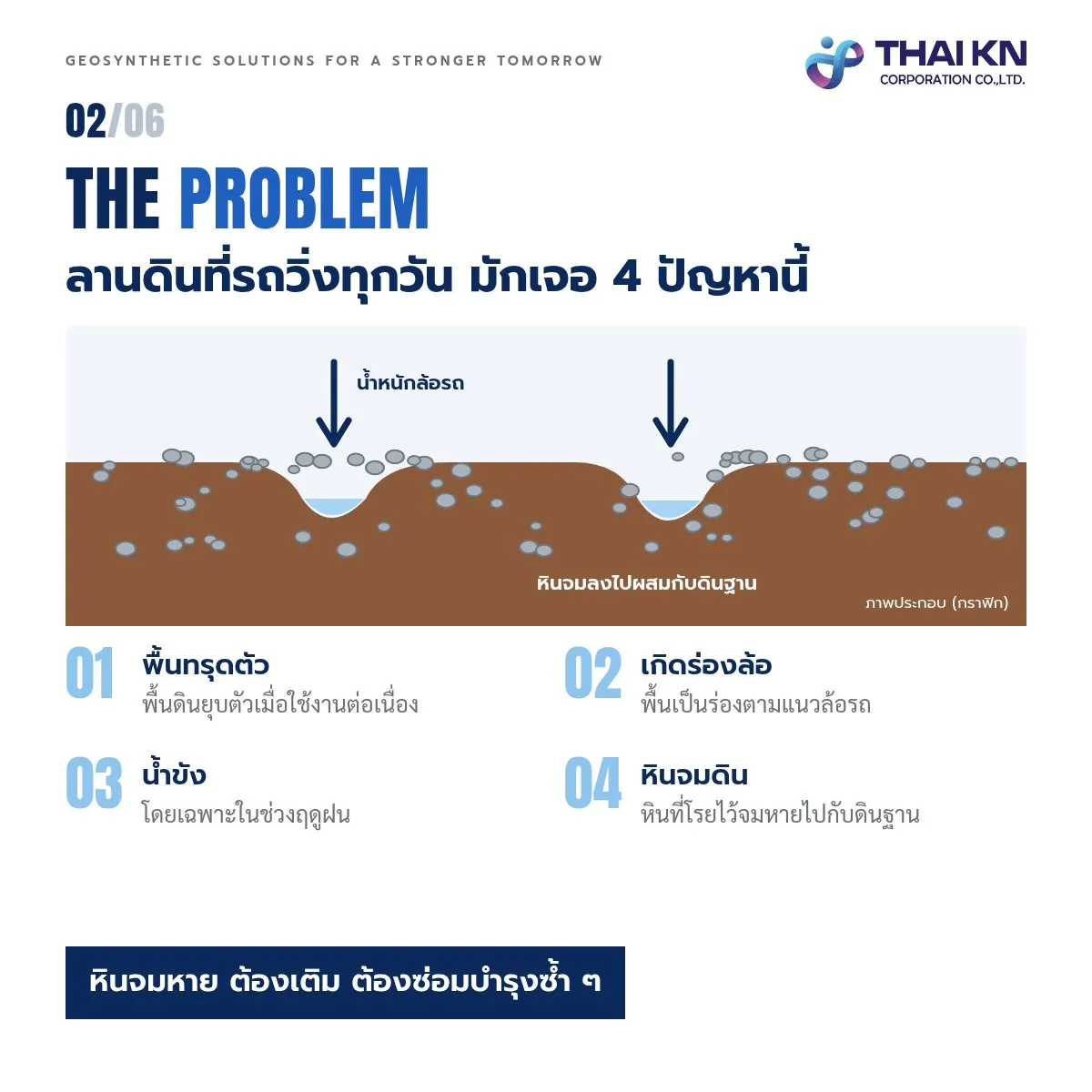
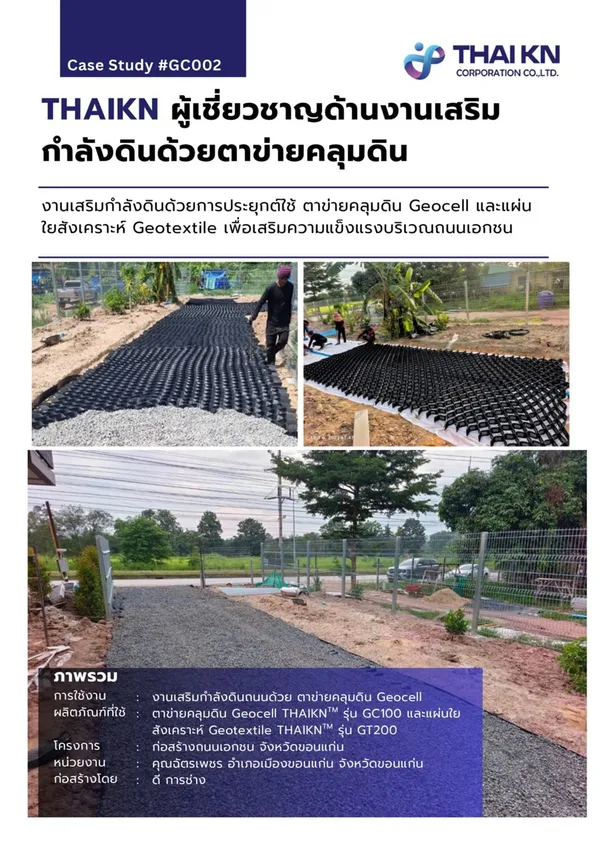
On another site, the team found that the existing soil was a silty clay that held a lot of water and did not take repeated loads well. The surface had wheel ruts, and placing crushed rock directly on it was likely to sink and lose compaction before long.
Imagine soft soil underneath, with stone placed directly on it. As vehicles pass again and again, the stone gradually sinks into the soil, while fine soil moves up and mixes with the stone layer. As they mix more, the stone layer works less well.
In short, the problem goes in two directions: the stone moves sideways when pressed by vehicle wheels, and the stone and the existing soil mix at the interface below
What does GEOCELL do? It confines stone in the cells
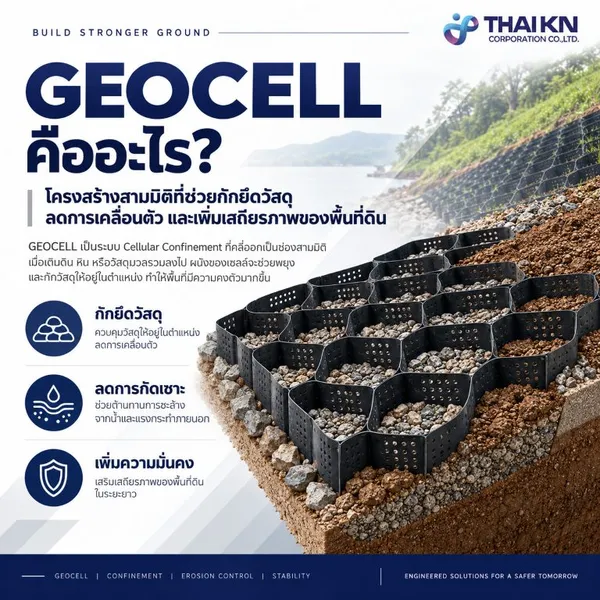
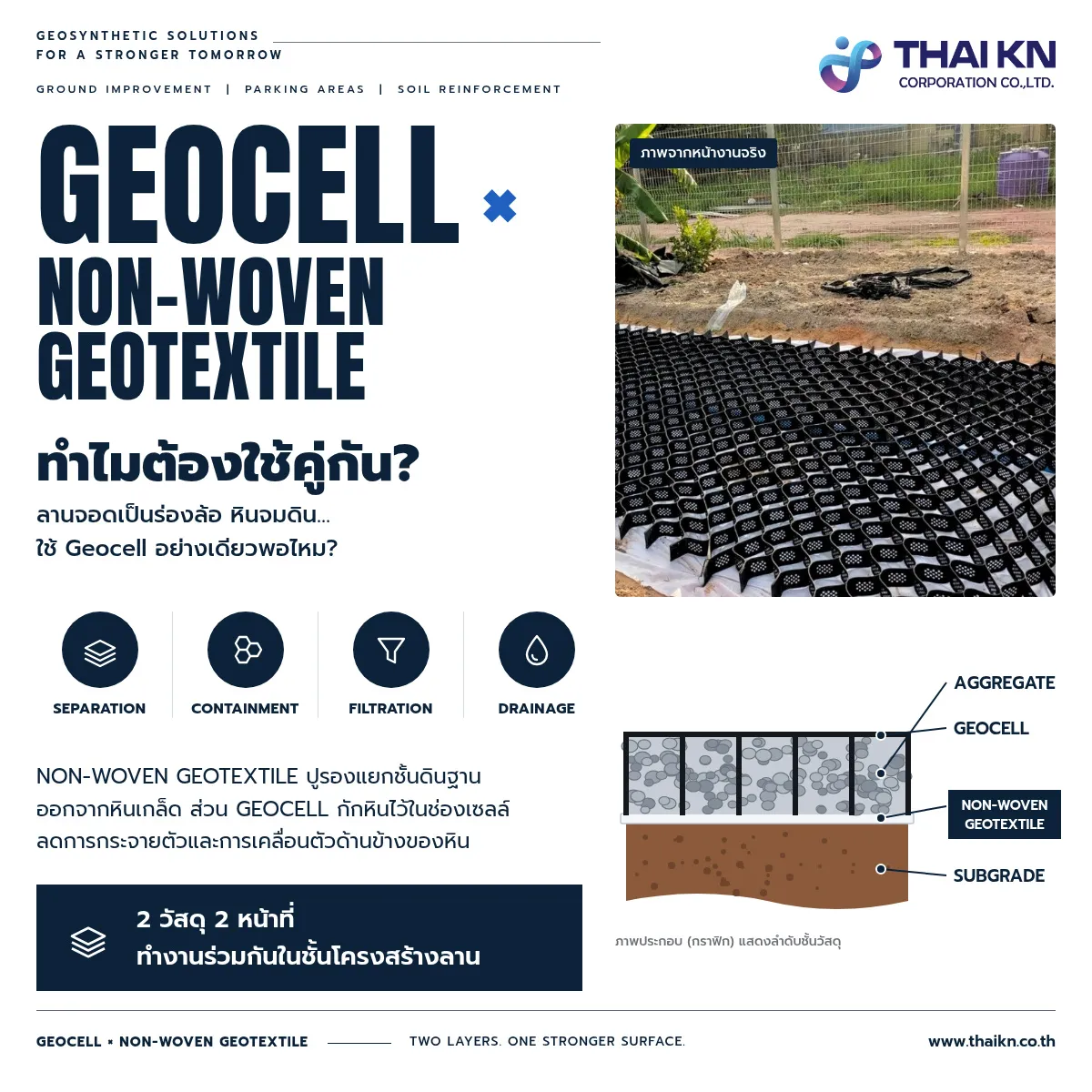
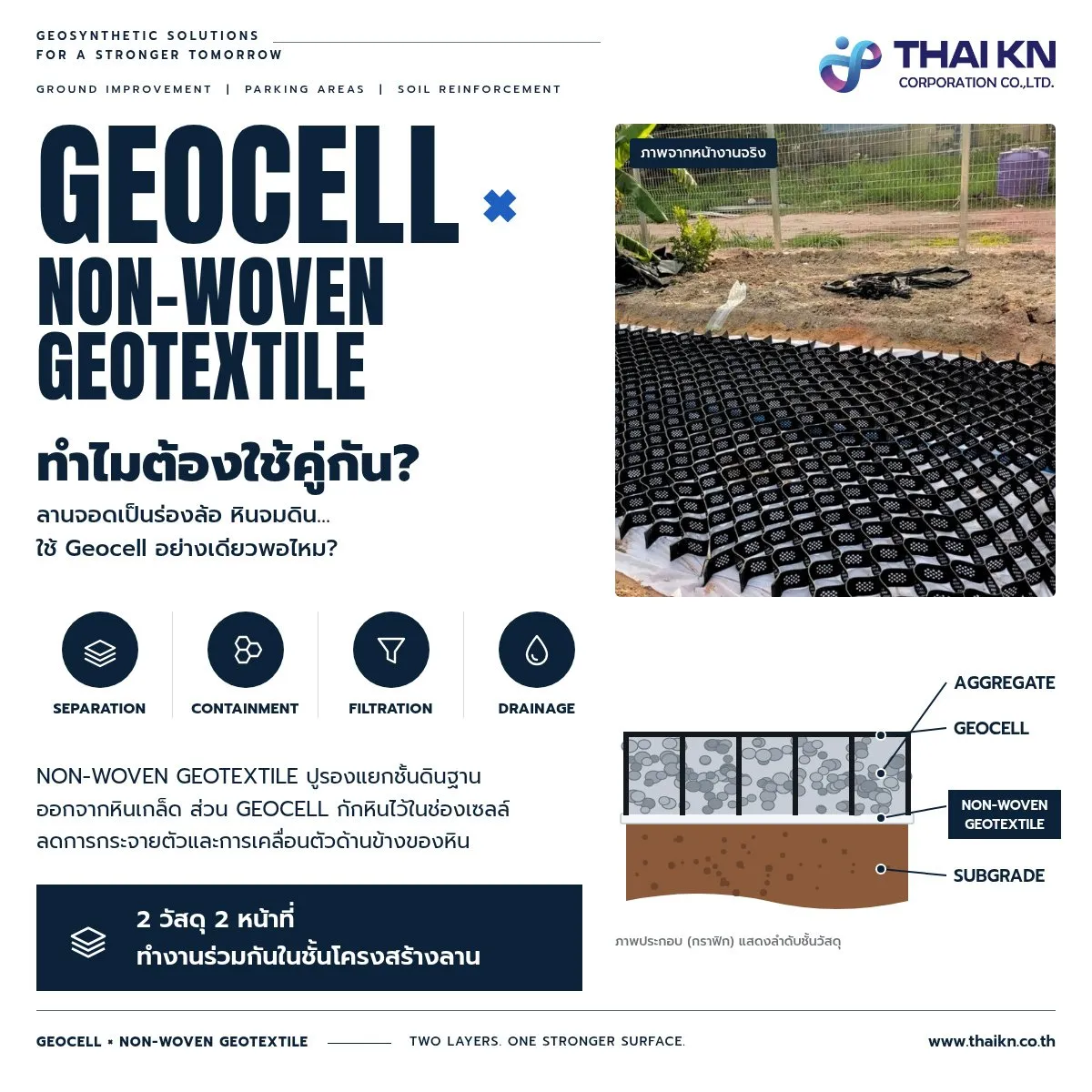
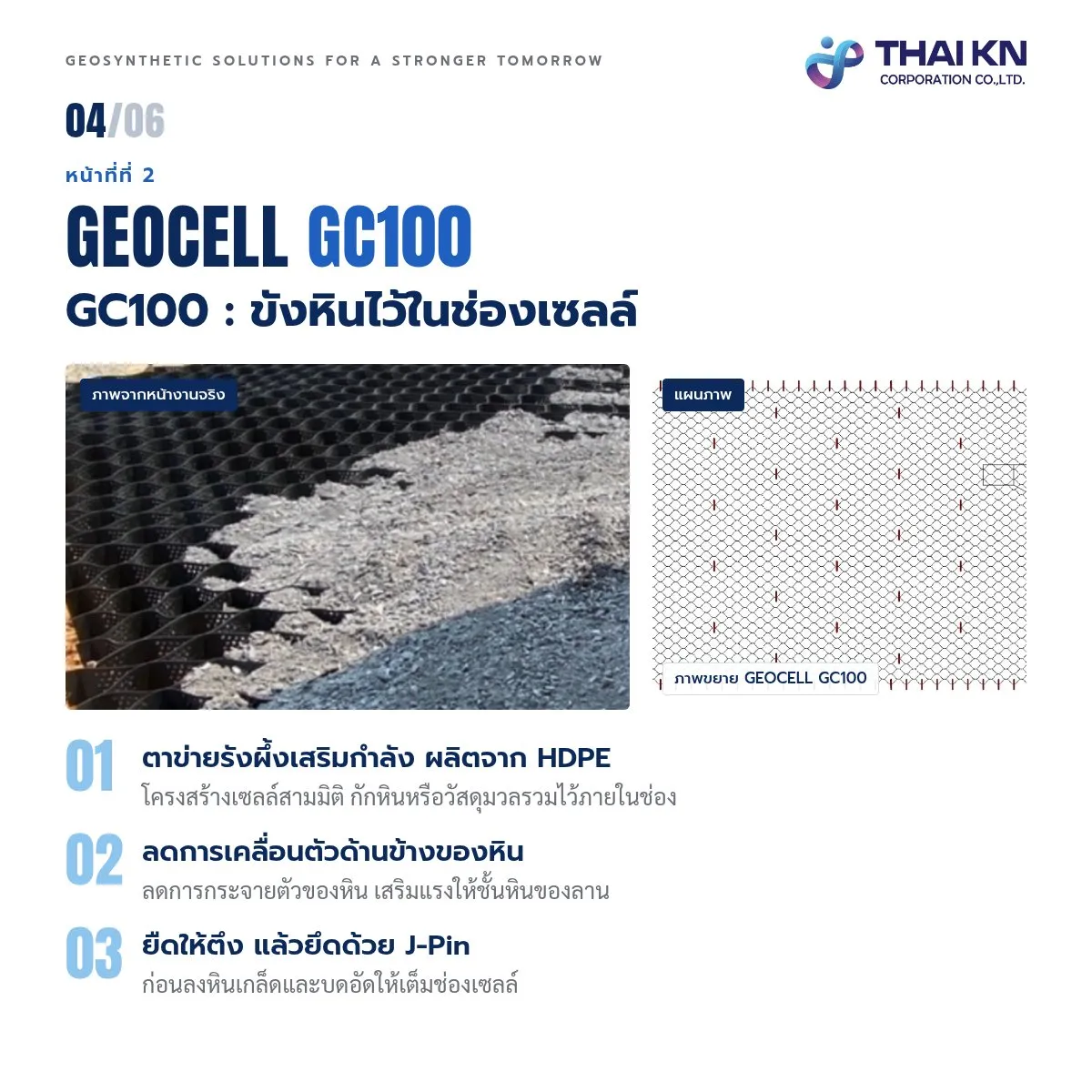
GEOCELL cellular confinement mesh is made from the synthetic polymer HDPE (High Density Polyethylene). It has the form of a honeycomb sheet. The three-dimensional cells confine soil, stone or aggregate inside the openings, reducing spreading and sideways movement of the material.
When a vehicle presses down on the stone layer, the material tends to move sideways, and if the soil below is weak this can lead to deformation, rutting or settlement of the material layer. When the stone is confined inside GEOCELL, sideways spreading is reduced, so the material layer works as a more stable composite layer.
For load-bearing work, GEOCELL can be used in the aggregate layer of a road, yard or load-bearing area to help limit sideways movement of the aggregate.
View product details GEOCELL cellular confinement mesh and the article What is GEOCELL?
What does NON-WOVEN GEOTEXTILE do? It separates the existing soil from the stone
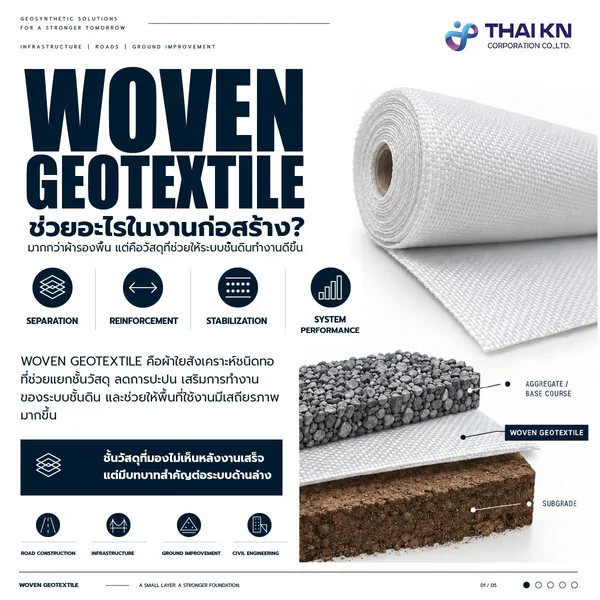
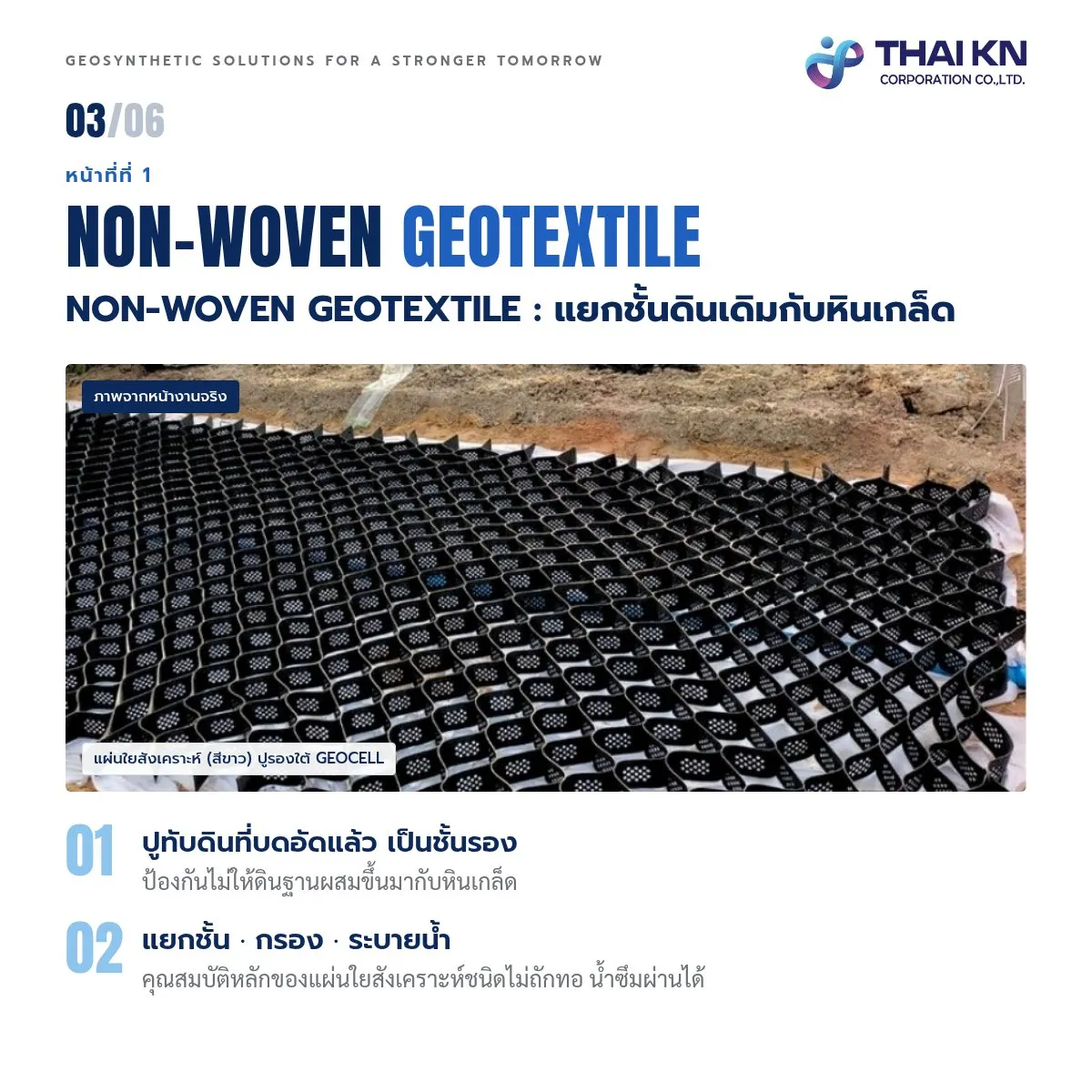
The main benefits of non-woven geotextile are separation, filtration and drainage. It is suitable for work that needs to separate soil, stone and sand, and water can pass through the sheet.
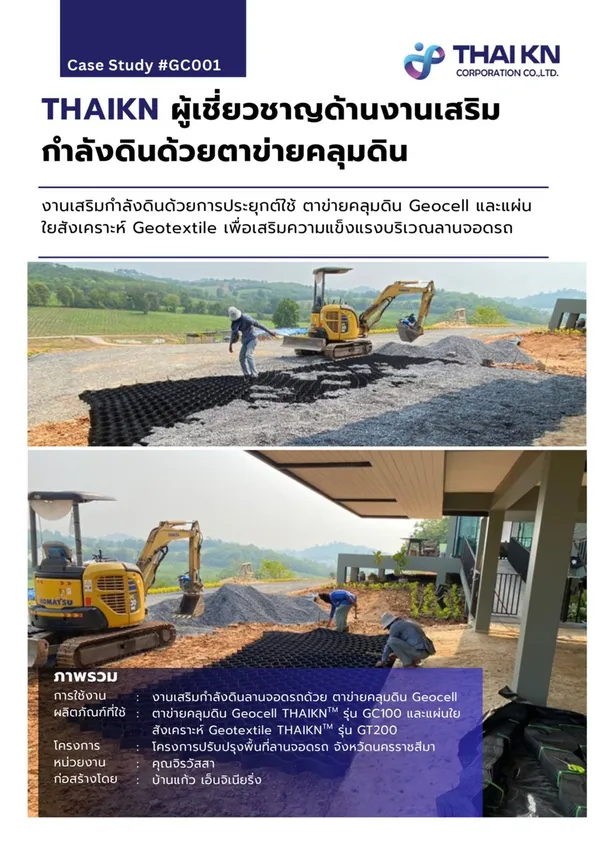
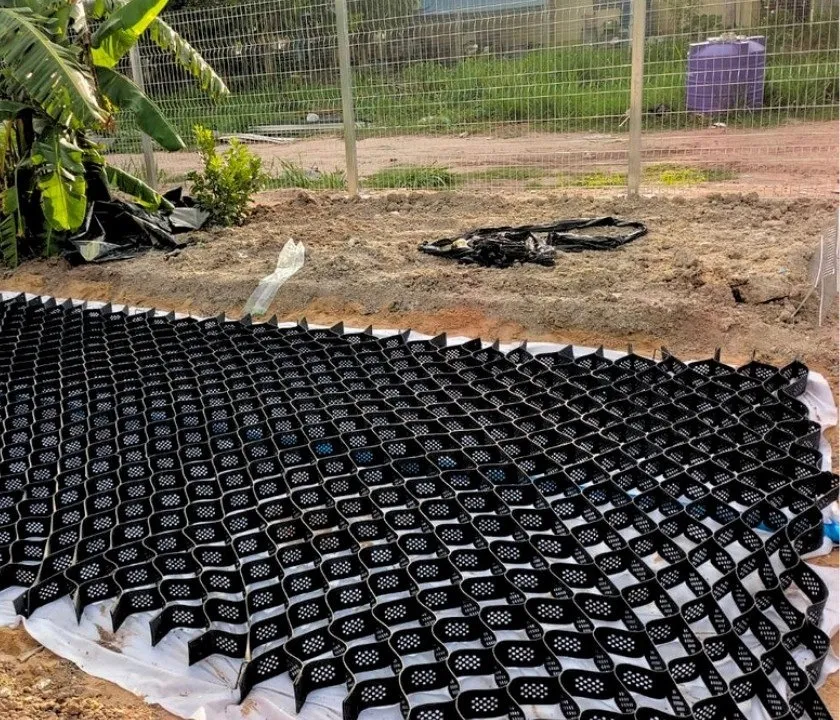
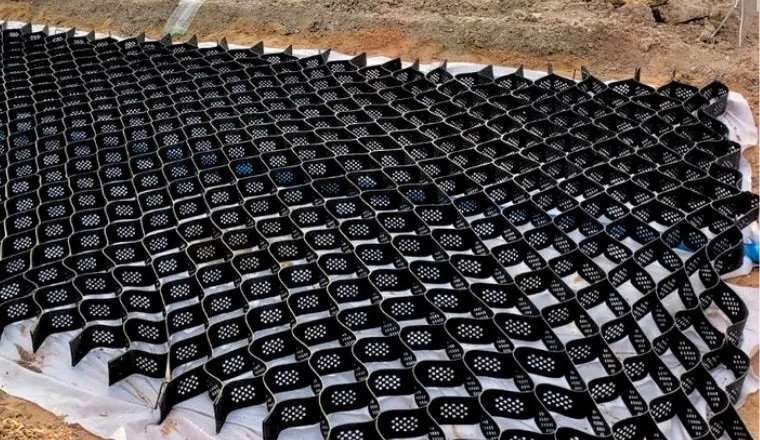
On THAIKN parking-lot sites, the team laid THAIKN™ GEOTEXTILE over the compacted soil as a base layer, to separate the existing soil and keep the subgrade from mixing up into the stone chips. On another site, non-woven geotextile was laid over the full area to separate the material layers and keep crushed rock from sinking into the soft soil.
The International Geosynthetics Society (IGS) describes separation as preventing materials or soils with different properties from mixing, for example using a geotextile between a road base and a soft subgrade.
View product details Non-Woven Geotextile
What do you gain by using them together? Each material has its own function
| GEOCELL (GC100) | NON-WOVEN GEOTEXTILE | |
|---|---|---|
| Position in the system | Upper layer, confining stone in the cells | Lower layer, laid over the compacted existing soil |
| Main function | Confines the material and reduces spreading and sideways movement of the stone | Separation, filtration and drainage; water can pass through |
| Problems it helps reduce | Stone is pushed sideways by vehicle wheels and the stone layer deforms into ruts | Subgrade soil mixes up into the stone, and stone sinks into the soft soil |
When they work together, GEOCELL looks after the upper stone layer so that it does not move, while NON-WOVEN GEOTEXTILE looks after the lower interface so that soil and stone do not mix. These two functions together address both directions of the problem on a parking lot built on existing soil.
Important to understand: GEOCELL does not replace a drainage system. If the site has groundwater, ponding water or high water pressure, a drainage system must be properly designed together with it.
The installation sequence from actual sites
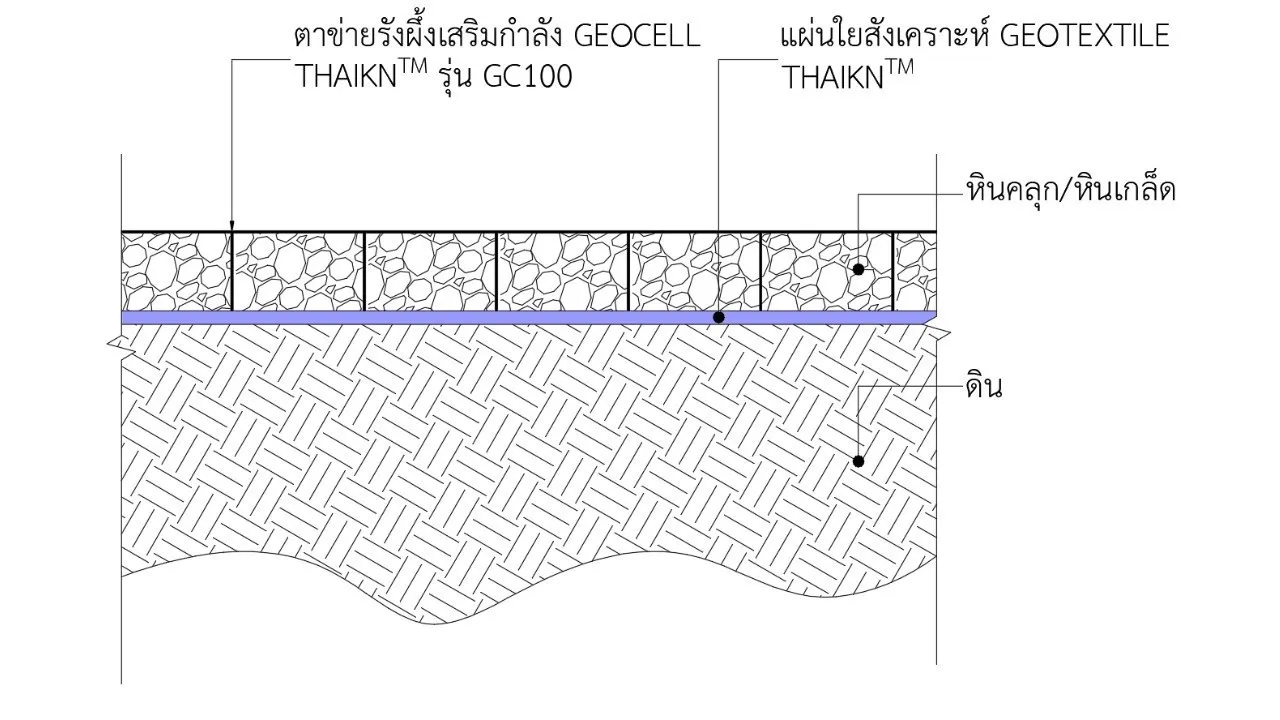
Layer sequence from the bottom up: Existing soil → NON-WOVEN GEOTEXTILE → GEOCELL GC100 + crushed rock/stone chips
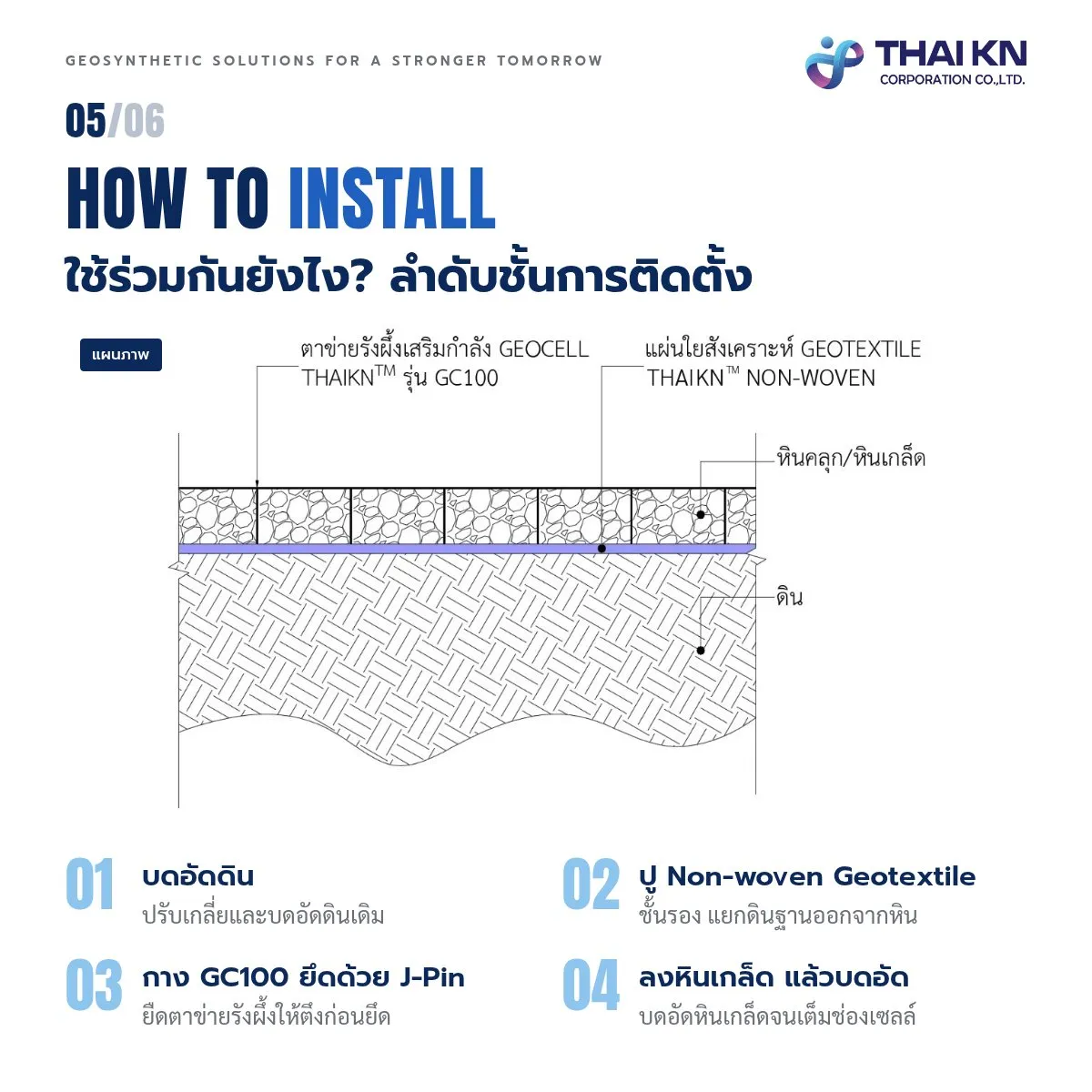
- Grade and compact the soil so that the existing area is even
- Lay THAIKN™ GEOTEXTILE over it as a base layer covering the full area
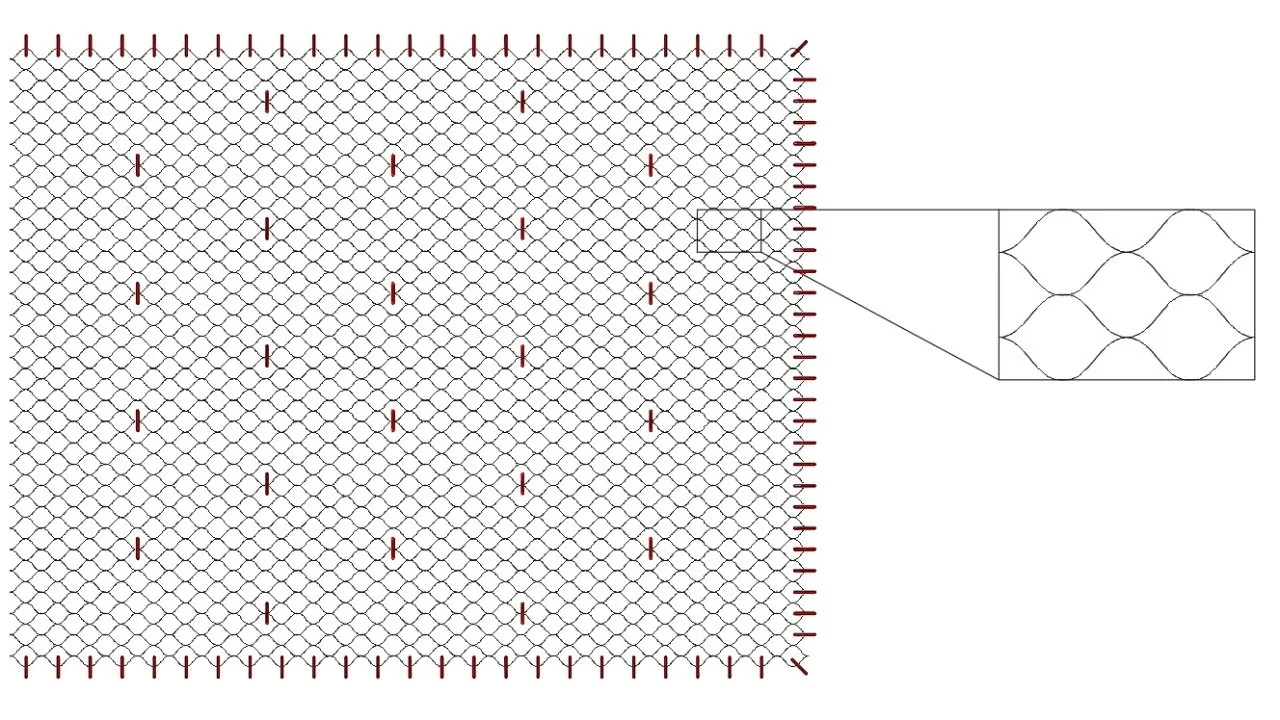
- Expand THAIKN™ GEOCELL model GC100 on the geotextile, stretch it taut against the ground, and anchor it with J-pins
- Place stone chips or crushed rock until every cell is full, then compact
Results after use on site
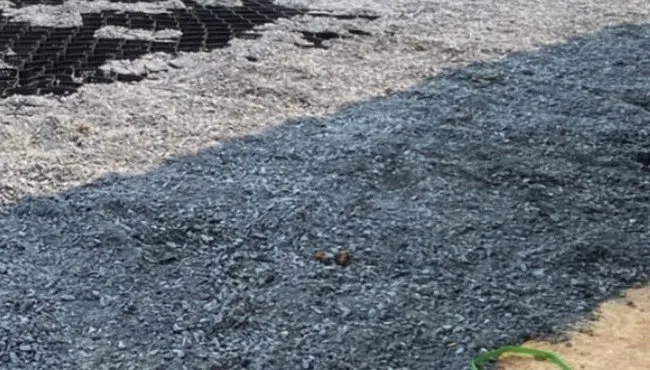
- Vehicles can enter and leave without the surface yielding or rutting, and the ground is firm and stable
- Soil does not push up into the stone
- Helps reduce settlement and the need to add new material
- On another site, after testing by driving in and out several times, no settlement or movement of the material was found
Read the full case studies: GEOTEXTILE + GEOCELL for parking-lot reinforcement and GEOTEXTILE + GEOCELL for private-road reinforcement
How do you choose a system that suits the site? What should you look at?
GEOCELL is not a material that solves every problem, and it should not be chosen on cost or cell height alone. Before choosing a system, the following information should be considered:
- Properties of the existing soil and the strength of the subgrade
- Type and size of the material to be filled into the cells
- Loads the area must carry, and the types of vehicle that will use it
- Water conditions on the site and the drainage system
Material selection should start from the question “What function do I need the material to perform?”, not from the product name alone.
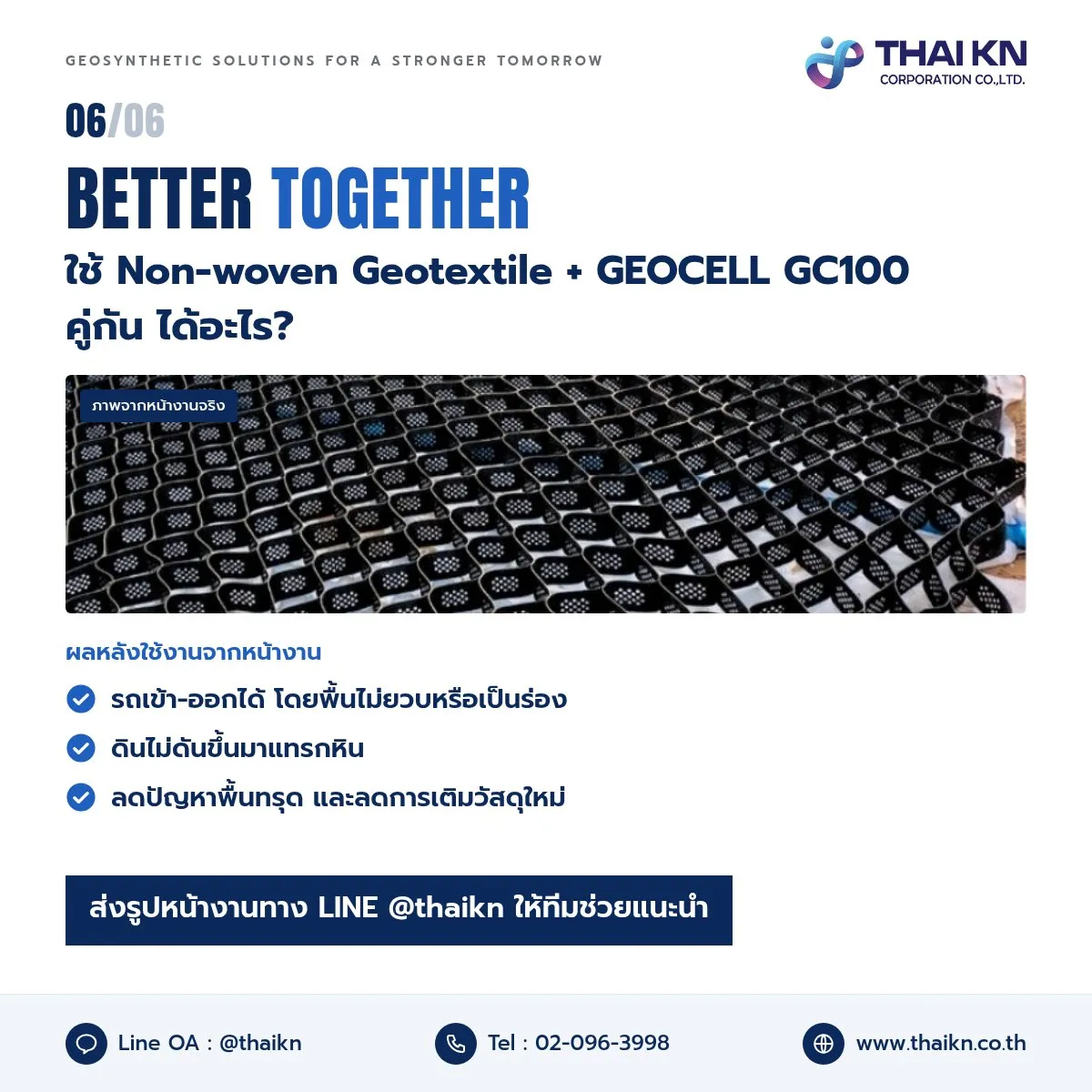
Summary: GEOCELL + NON-WOVEN GEOTEXTILE belong together because they have different functions
- GEOCELL Confines stone in the cells and reduces spreading and sideways movement
- NON-WOVEN GEOTEXTILE Separates the existing soil from the stone, filters, and allows water to pass through
- Results from actual sites Vehicles can enter and leave without the surface yielding or rutting; soil does not push up into the stone; less new material needs to be added
This two-layer system is the approach the THAIKN team uses for soil reinforcement of parking lots and private roads
Frequently asked questions (FAQ)
Can GEOCELL be used on its own, without laying GEOTEXTILE?
It depends on the soil conditions and use of each site. On THAIKN parking-lot work, the team laid non-woven geotextile before expanding the GEOCELL, to separate the existing soil and keep the subgrade from mixing up into the stone. If you are unsure, we recommend sending site photos for the THAIKN team to make a preliminary assessment.
Why does it have to be NON-WOVEN GEOTEXTILE?
Because the main functions of non-woven geotextile are separation, filtration and drainage, and water can pass through. Even so, there should be no rigid rule for choosing the type of geotextile. It should be selected to match the function and the engineering values of the project.
Where should the GEOTEXTILE be laid?
It is laid over the existing soil after grading and compaction, under the GEOCELL, as a base layer.
What can be filled into the GEOCELL cells?
It depends on the type of work, for example soil, crushed rock, aggregate, sand, planting soil, or a material specified in the design. For the parking lots on THAIKN sites, stone chips and crushed rock were used.
What other work can this system be used for?
GEOCELL can be used for roads, parking lots, working platforms and load-bearing areas. Non-woven geotextile is used in road works and in yards for stockpiles or container storage, among other applications.
Do you have a parking area with wheel ruts and stone sinking into the soil?
Send site photos, the area size or details of how the space is used, and the THAIKN team can give preliminary advice on using GEOCELL and NON-WOVEN GEOTEXTILE.
Tel : 02-096-3998
Email : sale@thaikn.co.th
Website : www.thaikn.co.th